Ash 55LB
Mixed blend, 55 lb

Two to four granule colors, pre-mixed to a fixed recipe before they reach you. The result looks like quarried stone instead of paint.
In short
Mixed color rubber granules are pre-blended bags of two to four EPDM colors combined to a fixed recipe, which gives a speckled, natural-stone look. Resin Rubber sells 12 blends in 55 lb bags and publishes the color-code percentages for each, so a reorder matches the original.
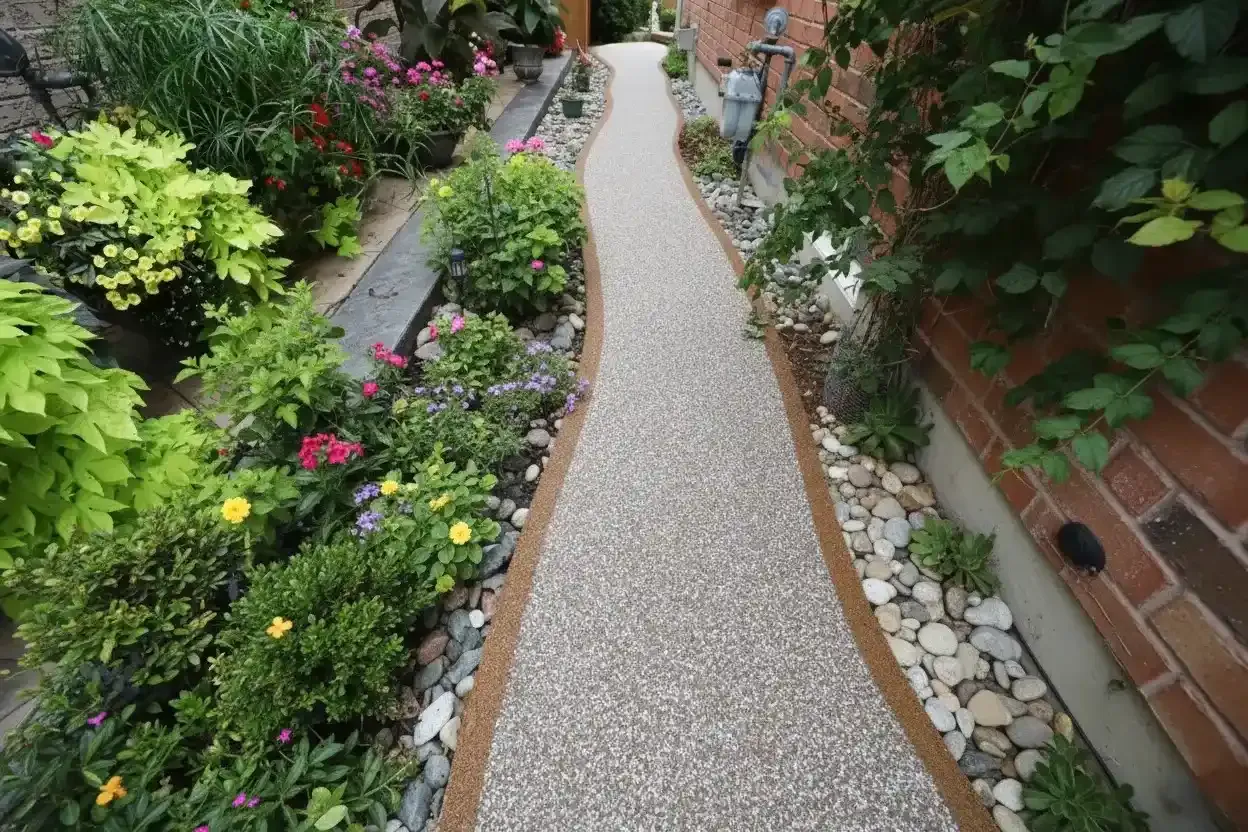
Because the blending happens before the bag is sealed, nobody on site is guessing proportions. An installer working through a large driveway or a multi-phase commercial job can expect the last pallet to look like the first. Hand-blending solid colors to chase the same look is possible, but pre-mixed bags get there faster and more consistently.
The same reasoning helps with repairs. Reorder the same blend for a patch or an extension later and you get a color match, not a close guess.
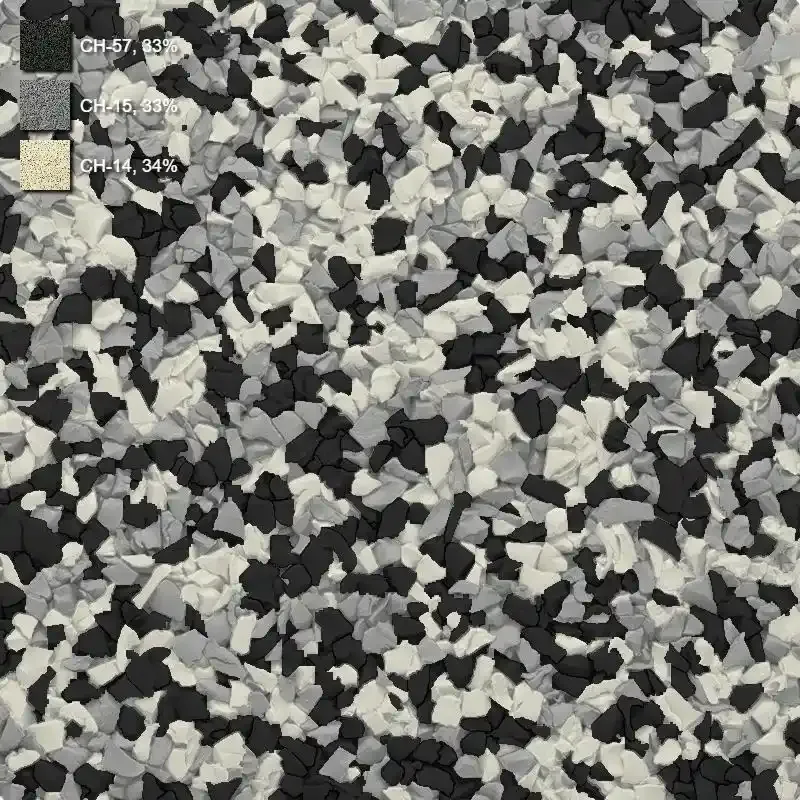
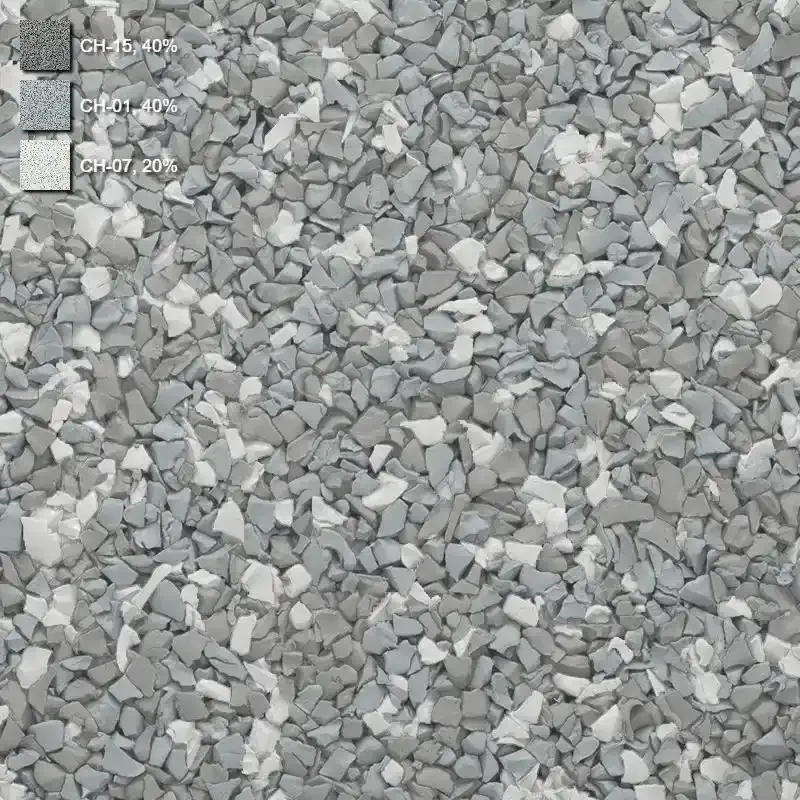
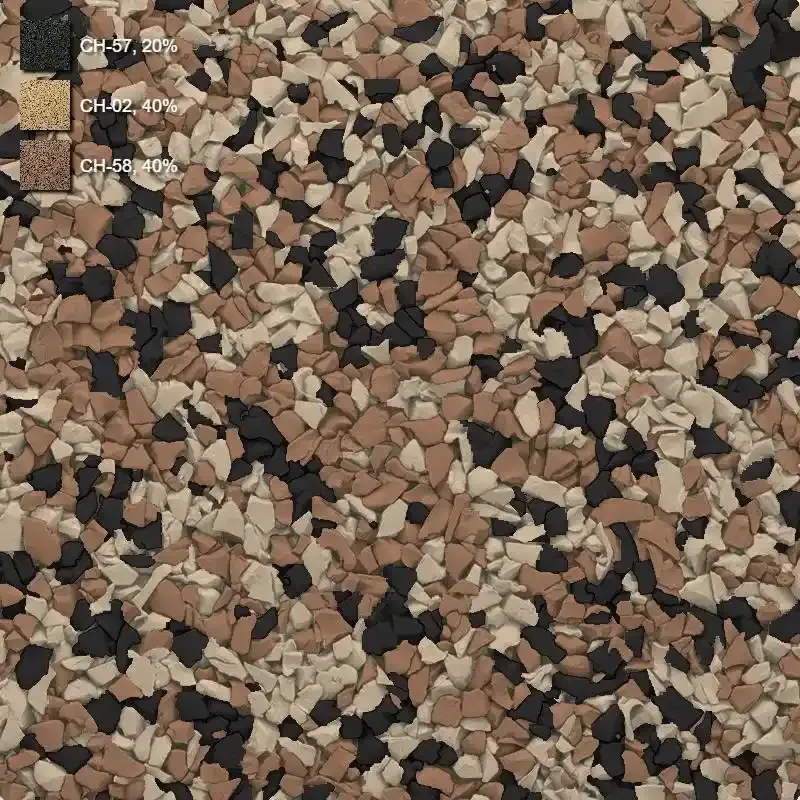
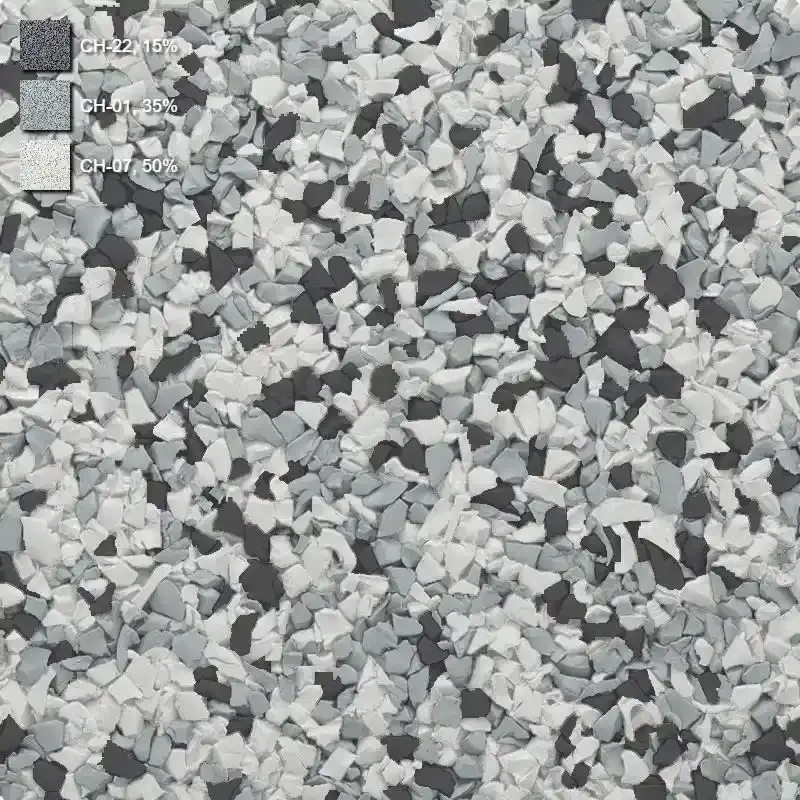
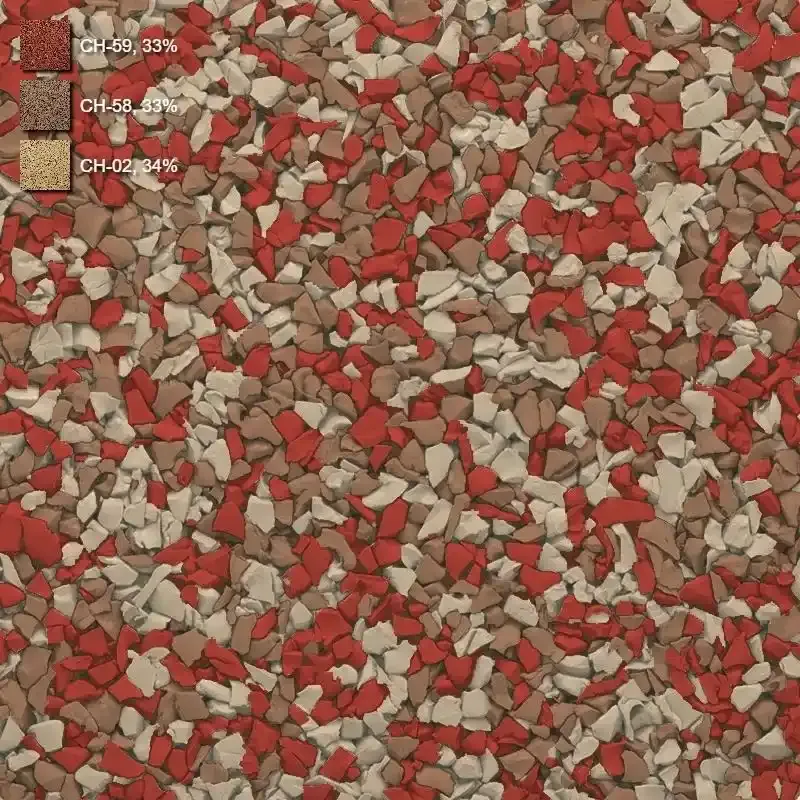
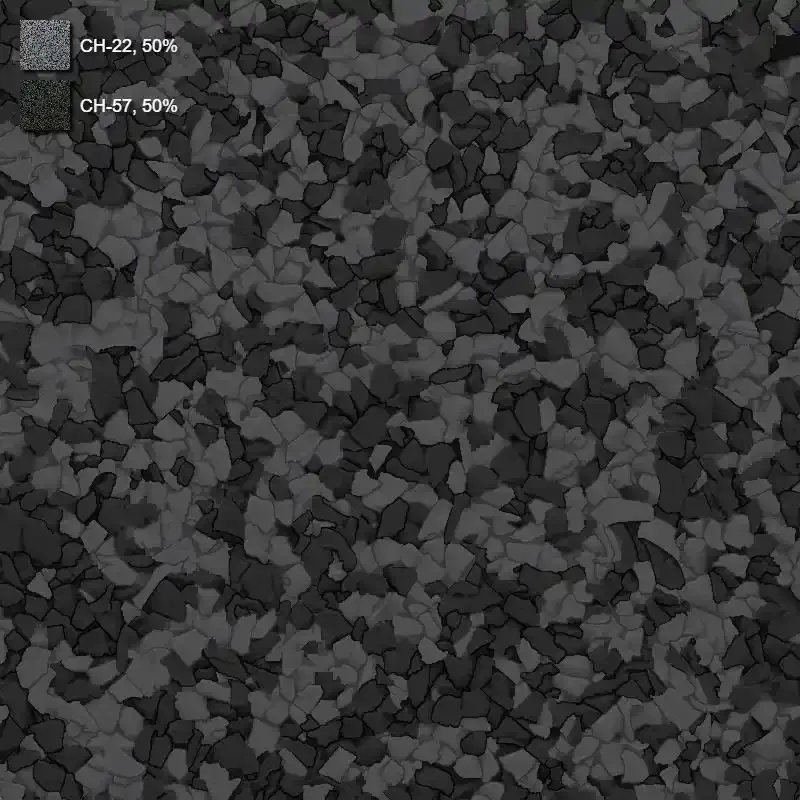
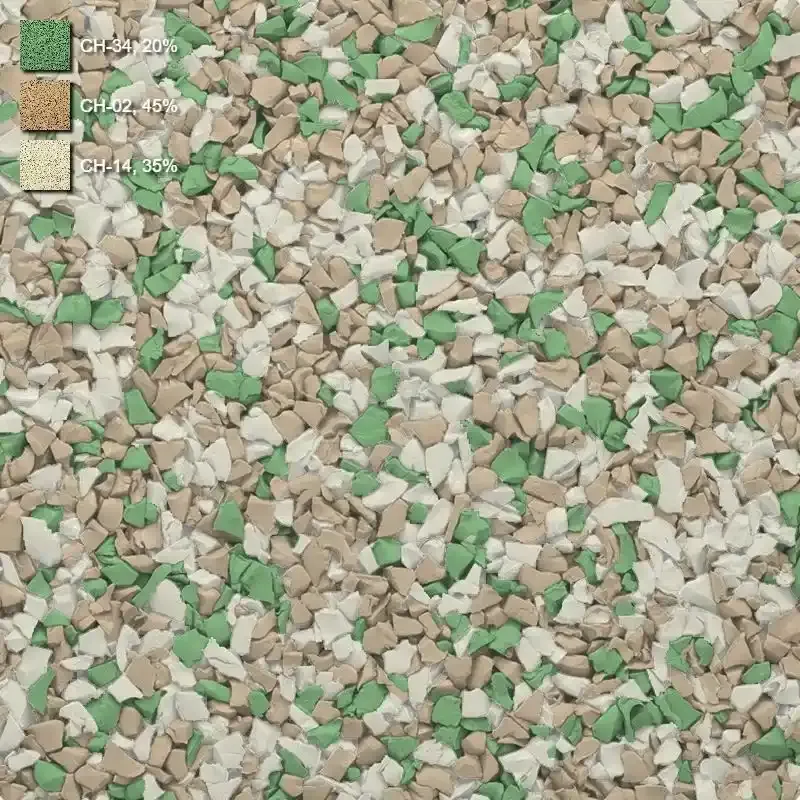
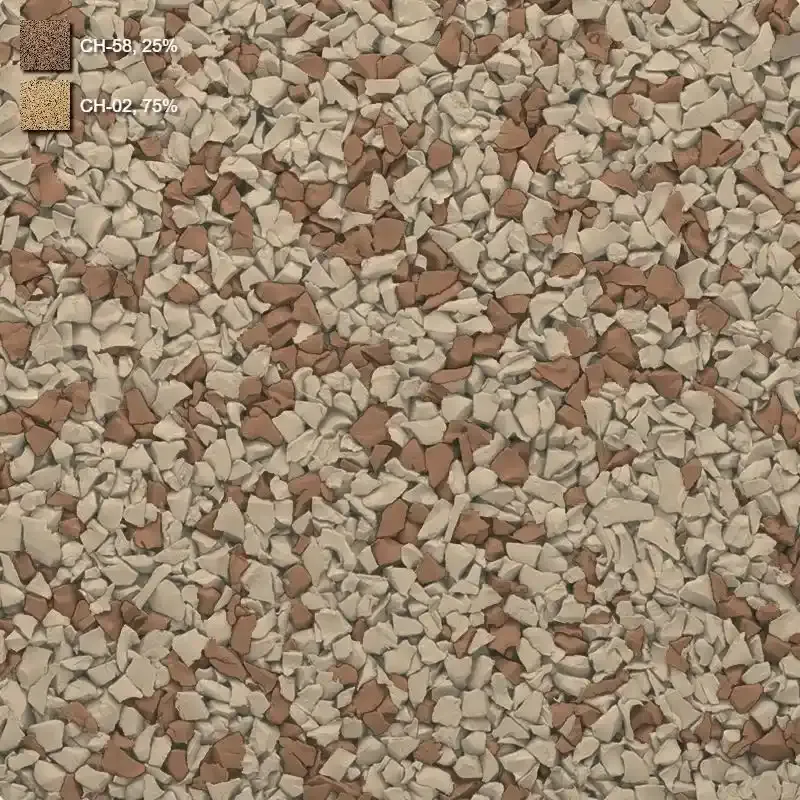
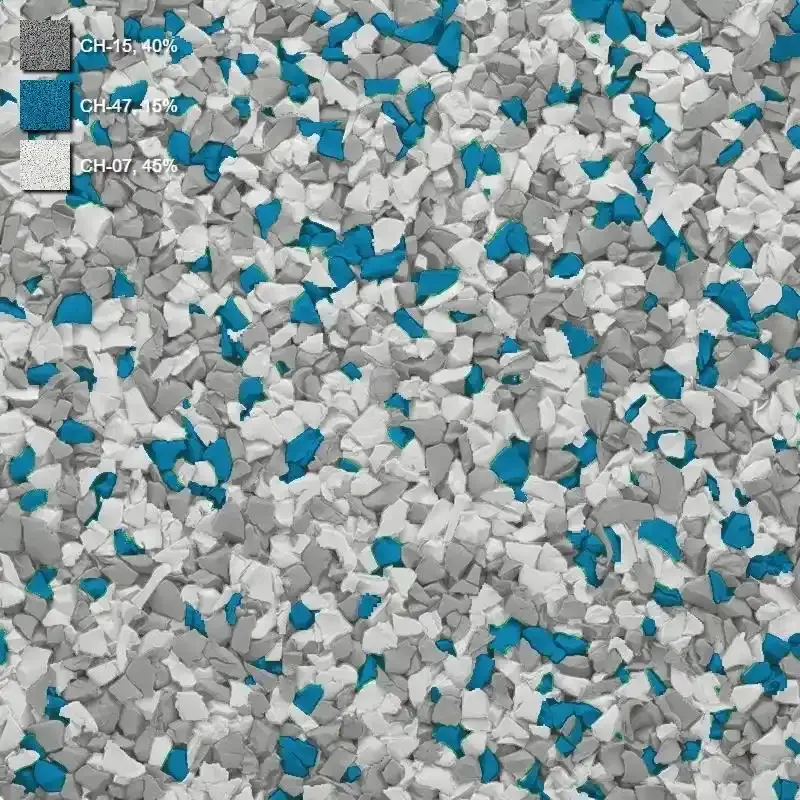
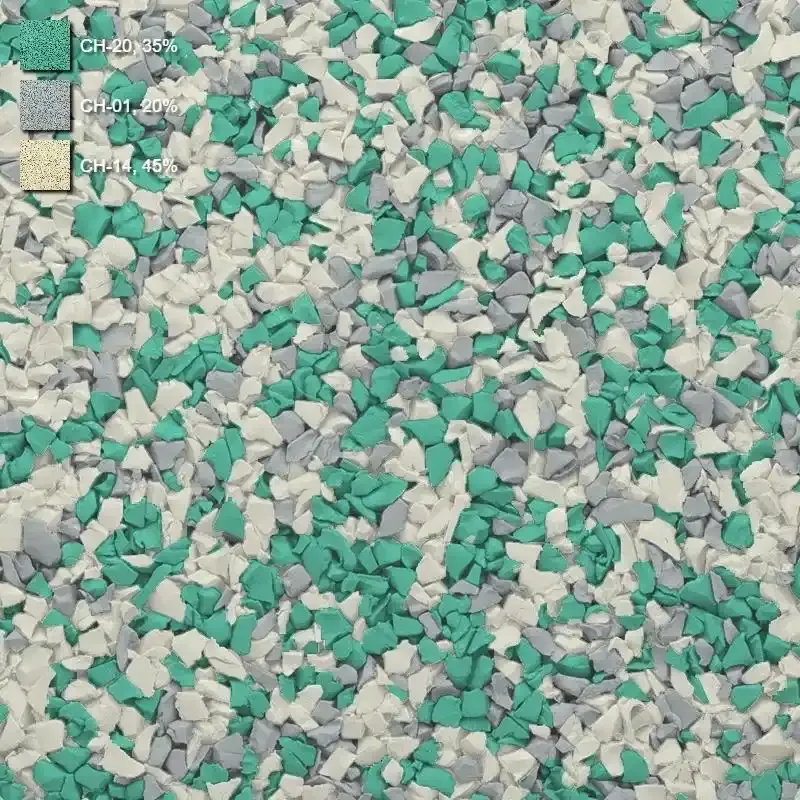
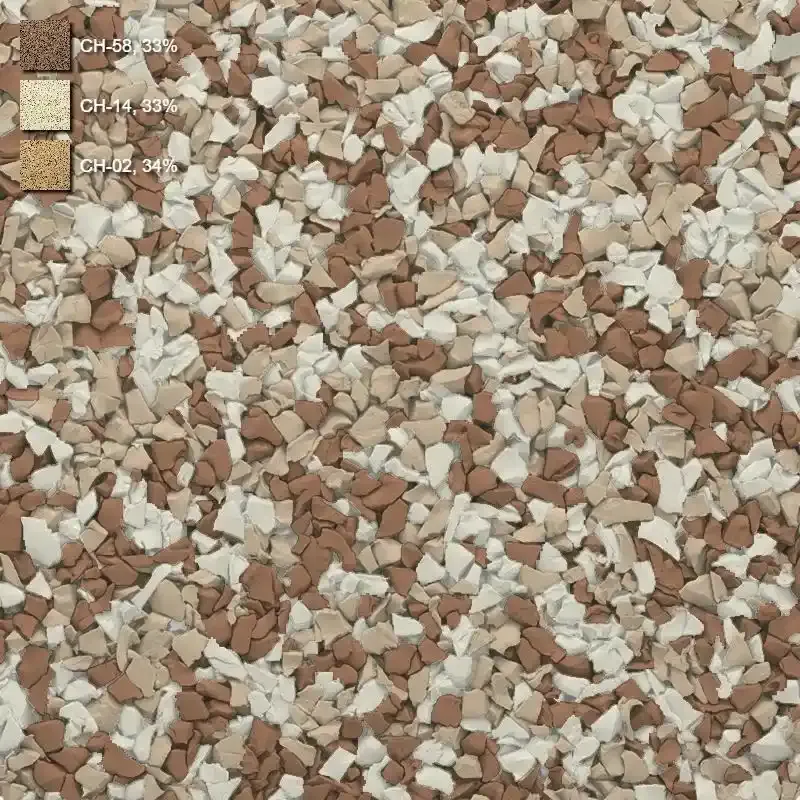
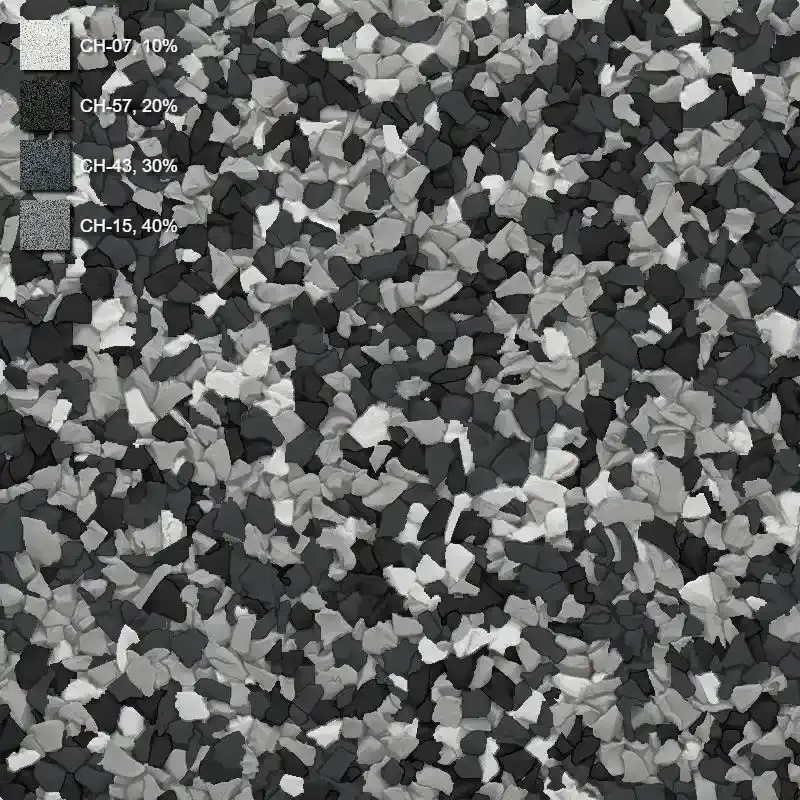
Ash, Colorado and Nightfall lean toward greys and blacks for a slate-like finish. Concrete and Frost are the pale greys. Dakota, Sahara and Sienna are warm browns and tans that read close to natural stone or gravel. Mesa brings in brick red. Sarasota and Sea Glass add a bright accent, blue or mint green, against a light base, which is why they show up so often on pool decks.
Homeowners doing a patio or driveway usually choose from the quieter end, such as Ash, Concrete, Frost or Dakota, so the surface sits comfortably next to existing stone. Commercial and municipal buyers more often choose higher contrast options like Sea Glass or Mesa on playgrounds, splash pads and courts.
Every blend is two to four base colors combined at fixed percentages. The full recipe for all 12 blends, listed by color code, is on the color options page and on each product page. These percentages describe the granule colors, not a binder mixing ratio.
The standard blends cover most projects, but larger commercial or municipal jobs sometimes need a custom ratio to match branding or an existing surface. Contact the team to talk through options, lead times and minimum order quantities.
Within a production run, yes, because the ratios are fixed. Small natural variation between runs is normal with any rubber product, so order the full project quantity at once wherever an exact match matters.
Lighter blends like Frost, Concrete and Sarasota generally stay cooler underfoot in direct sun, and Sea Glass adds color without going dark. Slip resistance comes from the surface texture and specification rather than the color. See the pool deck guide for base checks.
Coverage depends on total square footage and installed thickness. Approved trade customers can run the numbers through the material calculator, then have the materials team confirm quantities for your specification before ordering.
Next step
Send the area, the existing surface and how the space gets used. The materials team will work out granules, binder and quantities with you.