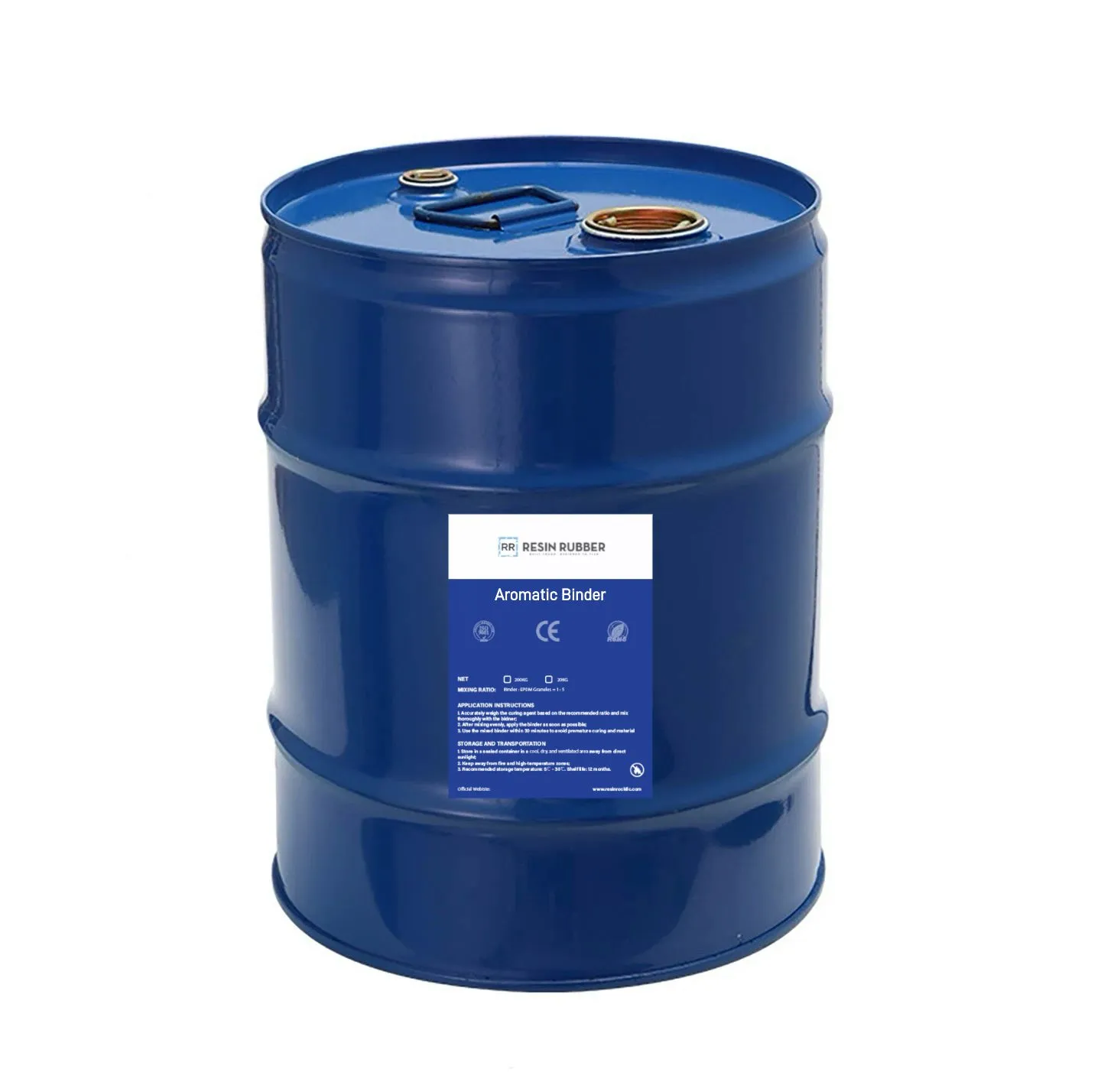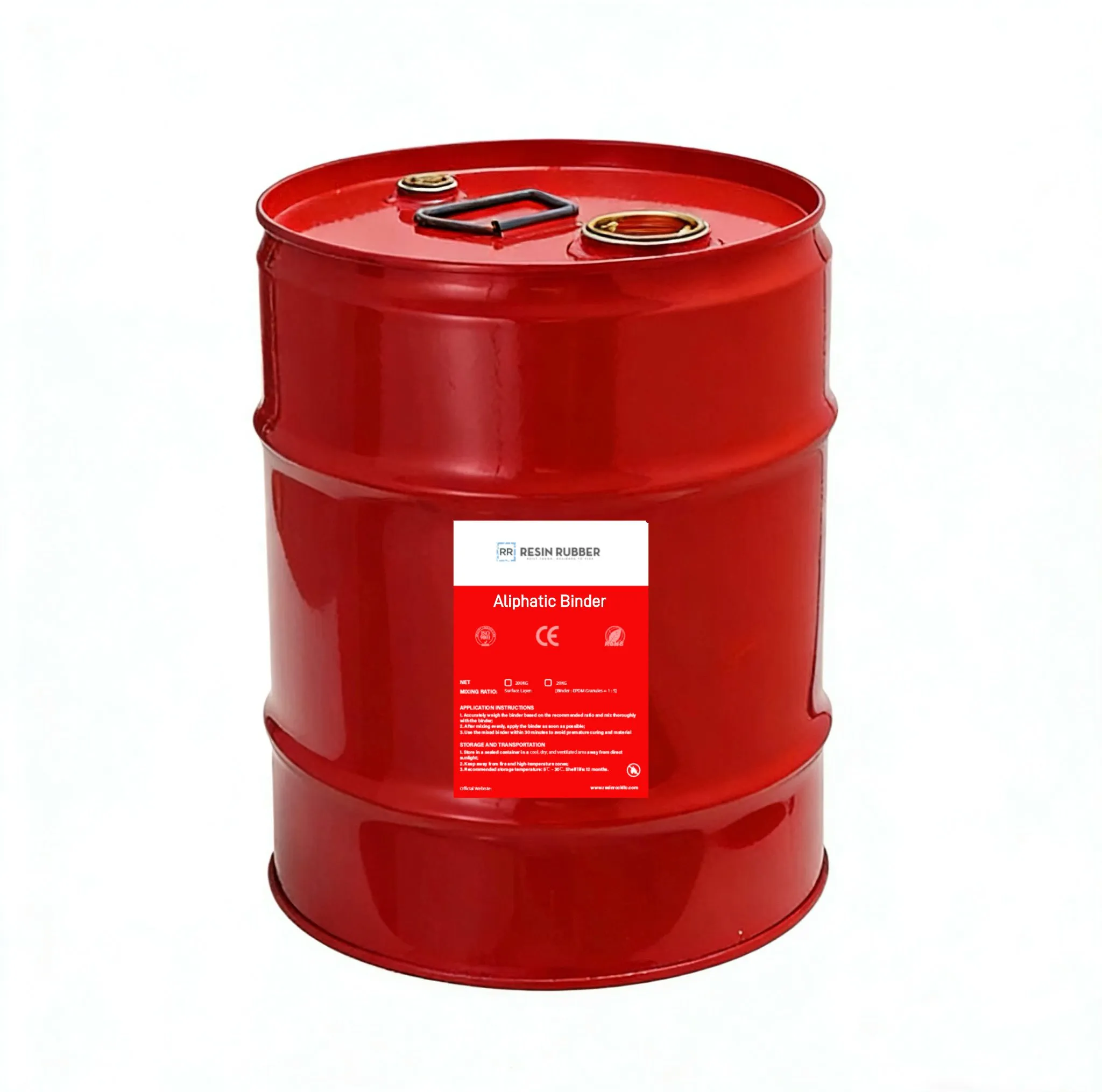
5-gallon pail (Aliphatic Binder)
Resin binder

Loose granules become a surface once they are coated in binder and cured. Which binder you need comes down to one question: will this layer see the sun?
In short
Resin binder is the liquid polyurethane that coats rubber granules or stone and cures into a solid, porous surface. Resin Rubber supplies two in 5-gallon pails: UV-stable aliphatic binder for exposed top layers, and lower-cost aromatic binder for base layers and anything kept out of direct sun.
| Aliphatic binder | Aromatic binder | |
|---|---|---|
| UV stability | Stable, resists yellowing | Not UV stable, yellows in sun |
| Typical layer | Exposed top or wearing course | Base course, covered layers |
| Relative cost | Higher | Lower |
| Pack size | 5-gallon pail | 5-gallon pail |
| Works with | EPDM granules and stone | EPDM granules and stone |
Anything that stays exposed to sun needs aliphatic binder: a pool deck wearing course, a pathway, a driveway topping. It costs more, and what that buys is UV stability. The color does not drift and the surface does not yellow.
If a layer will be covered by another material, such as a base course under a wearing layer, aromatic binder does the same structural job for less money. It is common for one project to use both: aromatic underneath, aliphatic on top.
Too little binder and the granules never fully lock together, so the surface can ravel and shed under traffic. Too much and it looks glossy or plastic and may not drain as it should. Stone and rubber absorb resin differently, and thickness changes the numbers, so ask the materials team to confirm quantities for your aggregate and specification. Getting it right the first time also avoids over-ordering.
Binders are not interchangeable by name alone. Request the current technical and safety data sheets for the product you plan to use.
It turns loose stone gravel or EPDM rubber granules into a surface. The binder coats the aggregate, then cures into a layer that is solid enough to walk and drive on but still lets water through. It is used under driveways, pathways, pool decks, playgrounds, sports courts and indoor floors.
Yes. Both the aliphatic and aromatic options work with stone gravel and EPDM rubber granules. The chemistry stays the same, but the mixing ratio can vary slightly because gravel and rubber absorb resin differently. Confirm the ratio for your aggregate with the materials team.
Temperature and humidity decide it. As a general guide, a surface is often walkable within about a day and fully cured over the following days, faster in heat and slower in cool, damp weather. Follow the product data sheet and your installer, who sets the real timeline based on conditions on the day.
It depends on the build. A single-layer installation usually uses aliphatic throughout because all of it is exposed. Once a separate base course is involved, aromatic often goes underneath and aliphatic is kept for the exposed top layer, which keeps material costs sensible.
Both binders have a minimum application temperature. Curing slows a lot in cold conditions and stops well before freezing. If you are installing outside typical warm-season conditions, check temperature requirements with the materials team before scheduling the pour.
Next step
Send the area, the existing surface and how the space gets used. The materials team will work out granules, binder and quantities with you.