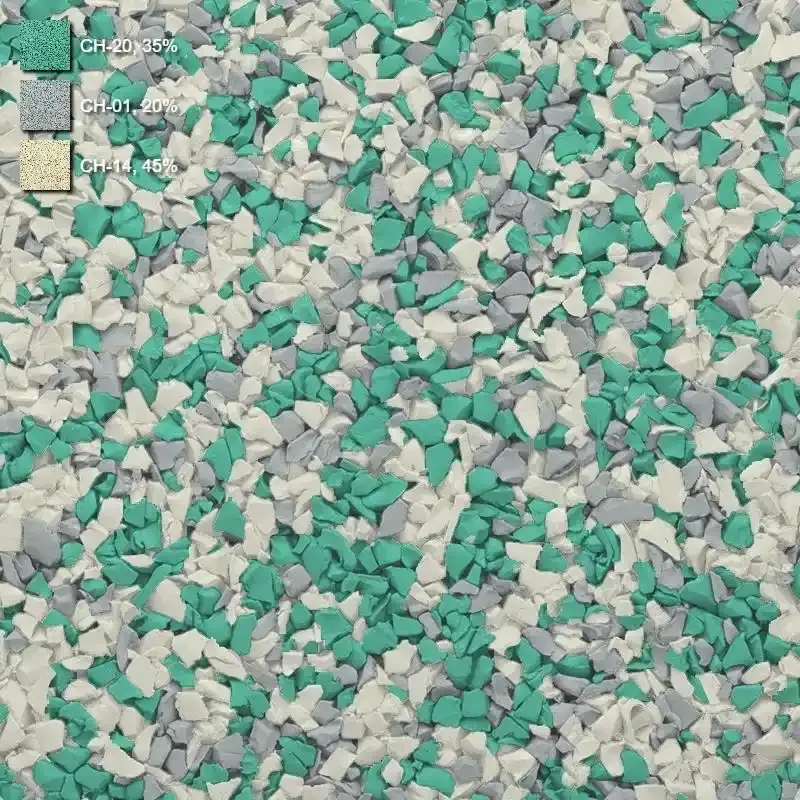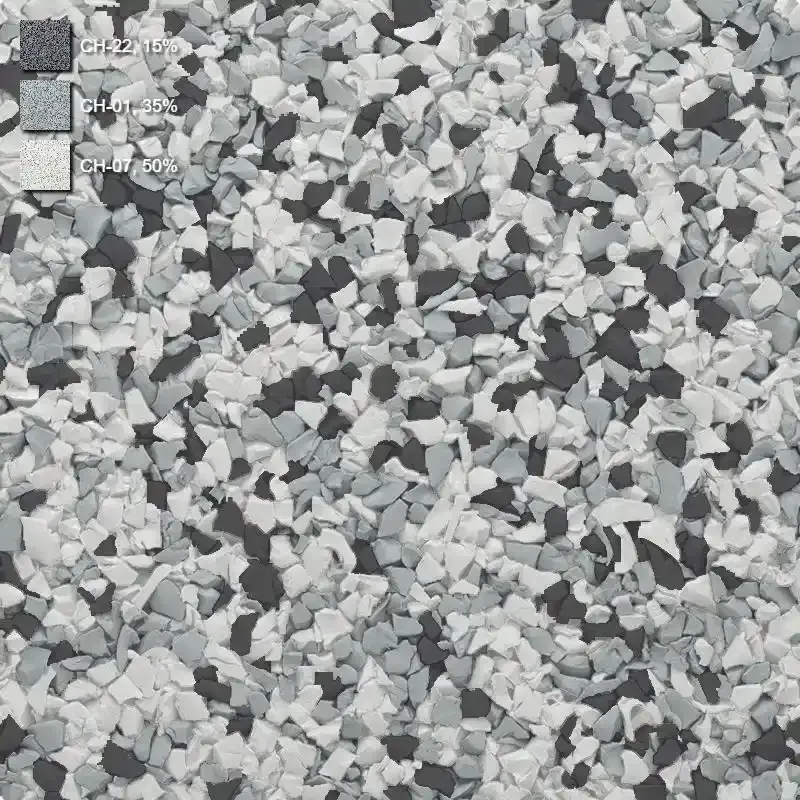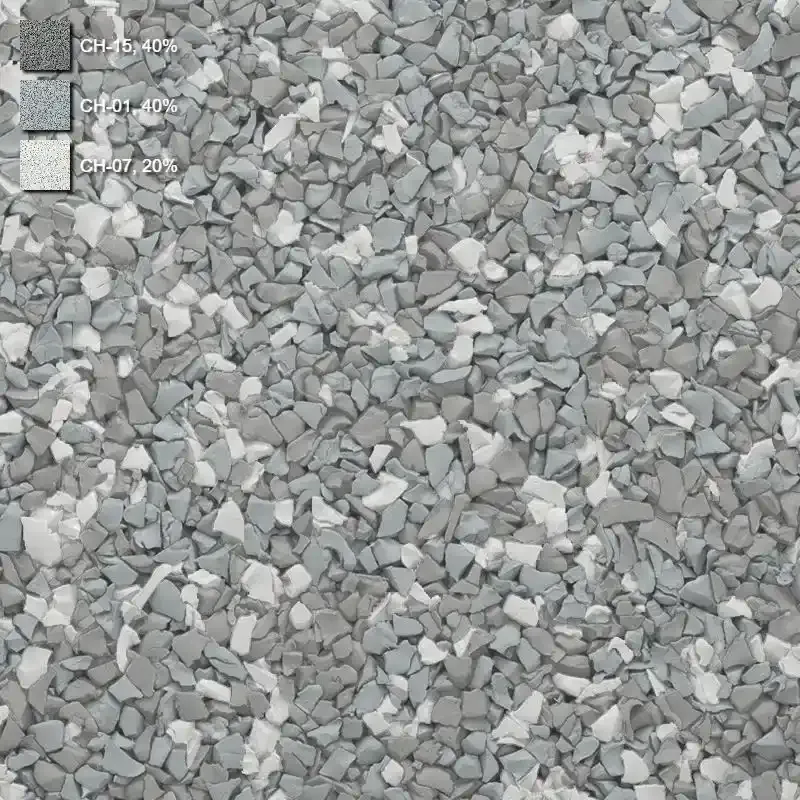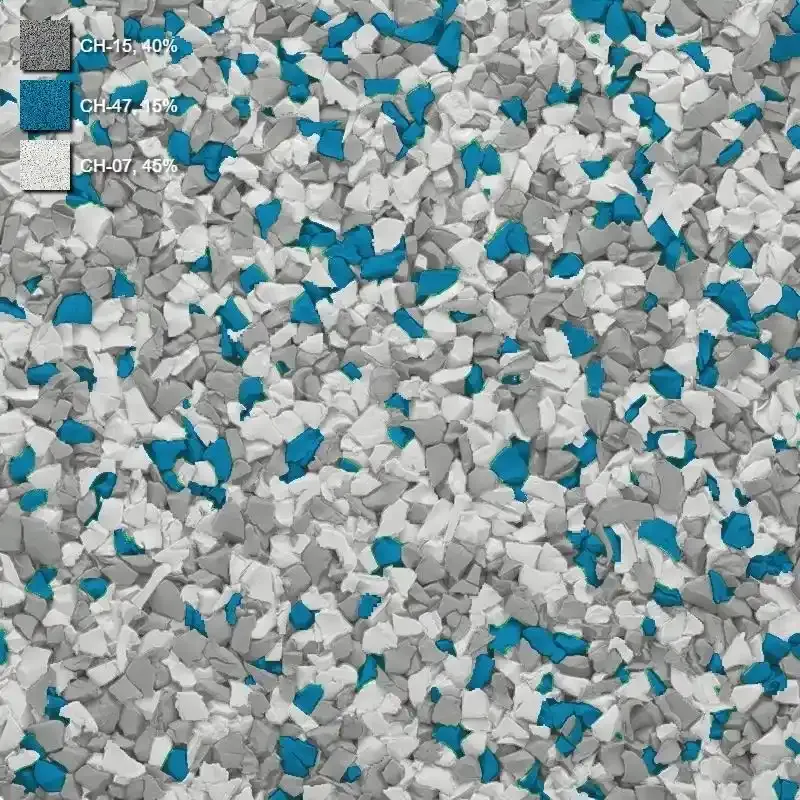
Sarasota 55LB
Mixed blend, 55 lb

Materials and planning for poured rubber around pools and splash pads, across the U.S. and Canada. We supply the materials and connect you with an approved installer who buys them from us.
In short
A resin rubber pool deck is a poured-in-place layer of EPDM rubber granules and resin binder laid over a prepared base around the pool. Resin Rubber supplies the granules, binders and tools. An approved installer checks the base and drainage and confirms a system suited to wet areas.
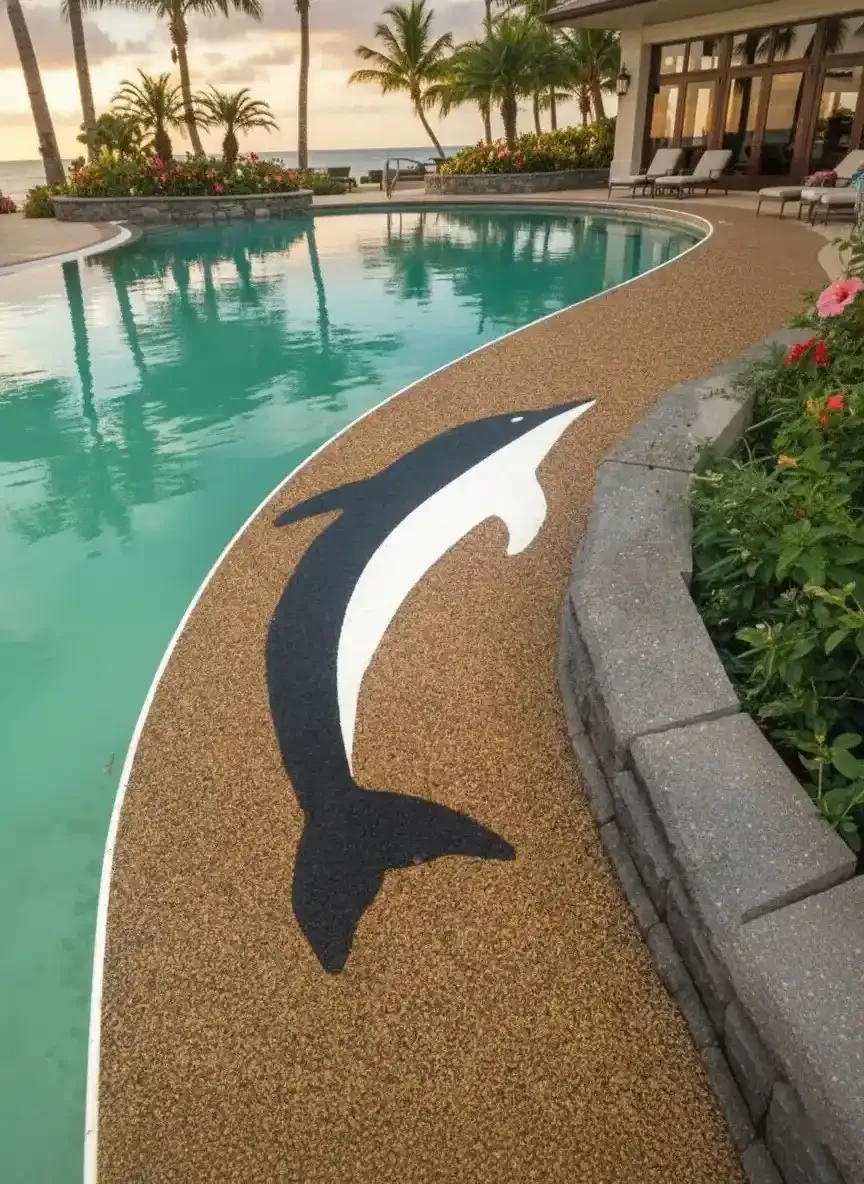
Resin rubber surfacing combines EPDM granules with a resin binder on a prepared base. Ask your installer to confirm the proposed system suits your site, including wet conditions, maintenance, base condition, movement, joints, drainage and sun exposure. Agree how the new surface finishes at the coping, steps, curves and level changes before anything is ordered.
The deck you already have shapes how the resurfacing goes. Settle these with your installer first:
Preparation, sequence and curing are covered in the installation guide.
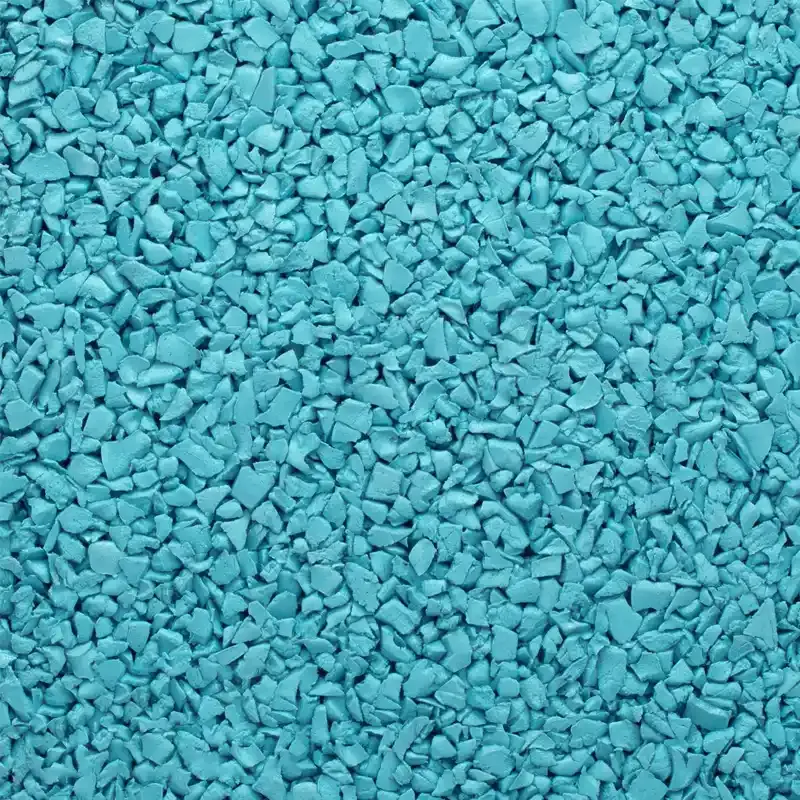
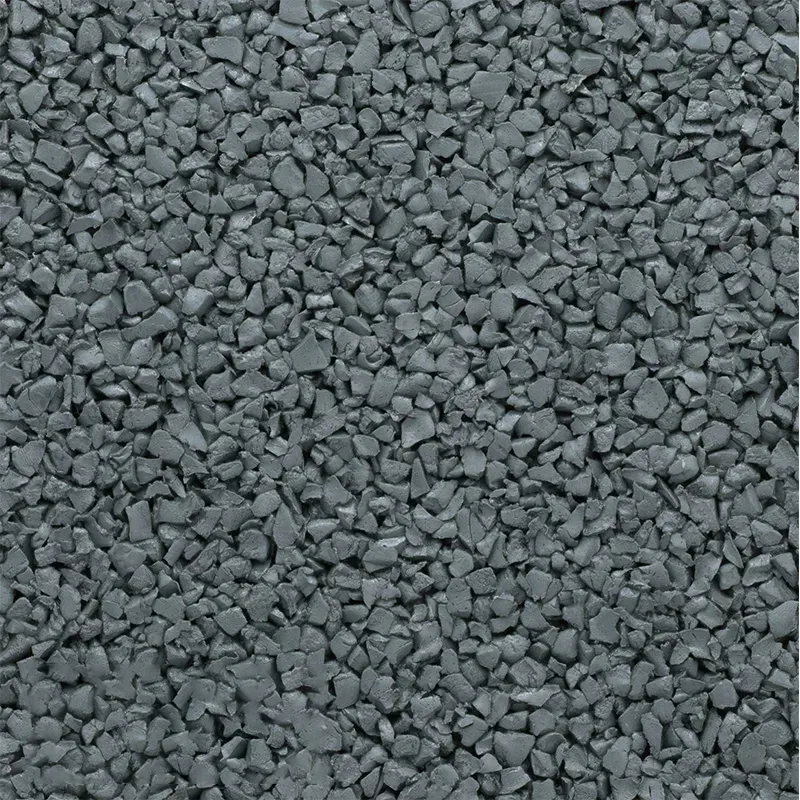
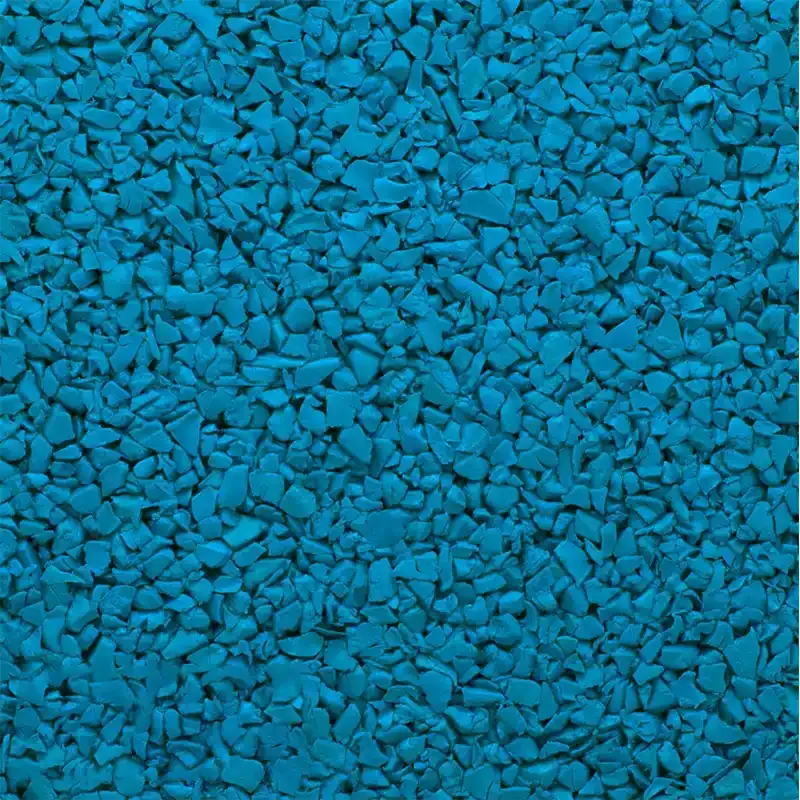
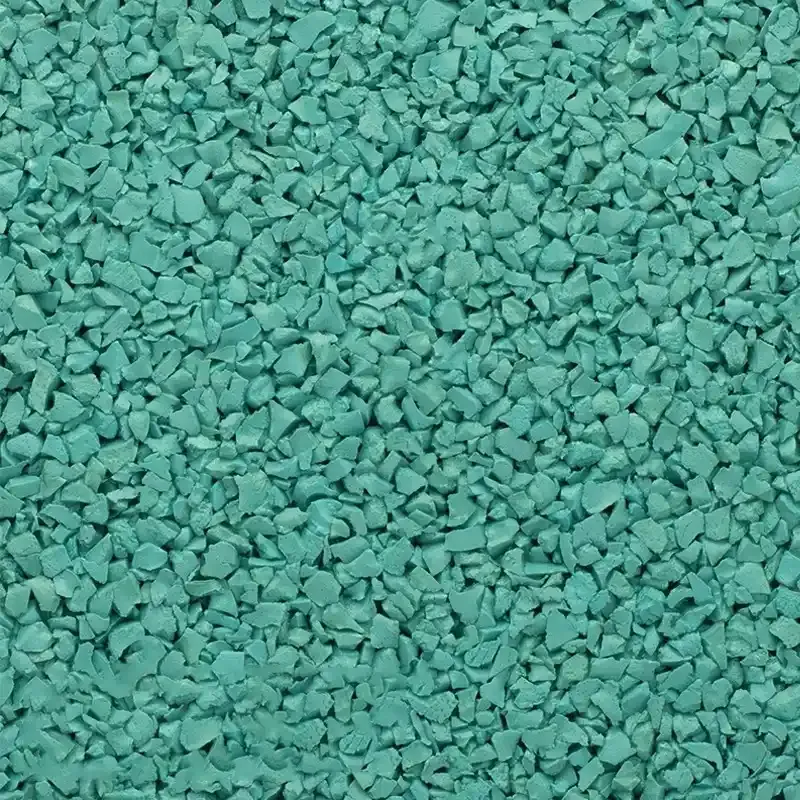
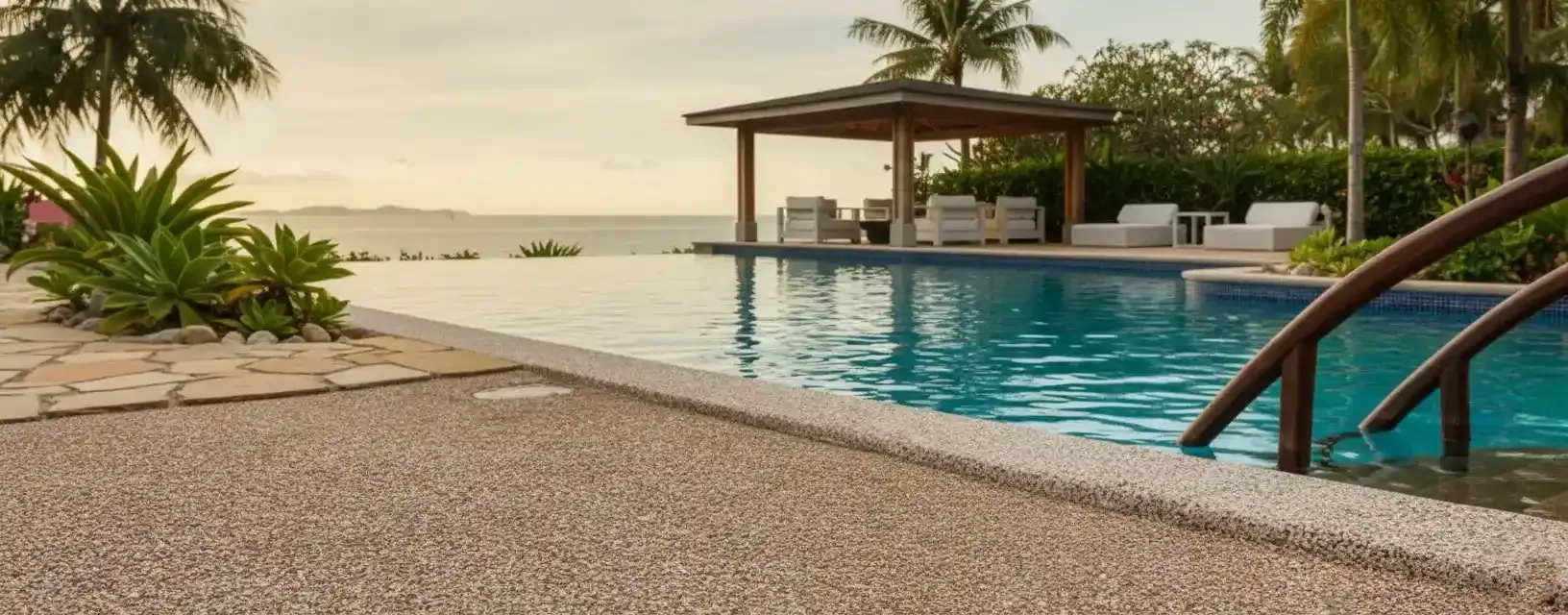
Colors come in two ranges. Solid colors are one granule shade. Mixed blends combine several colors to a published recipe, and the percentage breakdown for each is on the colors page. Lighter colors generally stay cooler underfoot in direct sun, which is why pale blends and blues are common around pools.
Screens and printed charts only go so far. Request a physical sample and compare it on site against the paving, coping, planting and the house before you confirm the order. You can also try combinations in the rubber visualizer.
Quantities depend on the area and your specification. Send the deck measurements to the materials team and we will work out what the job needs rather than apply a rule of thumb.
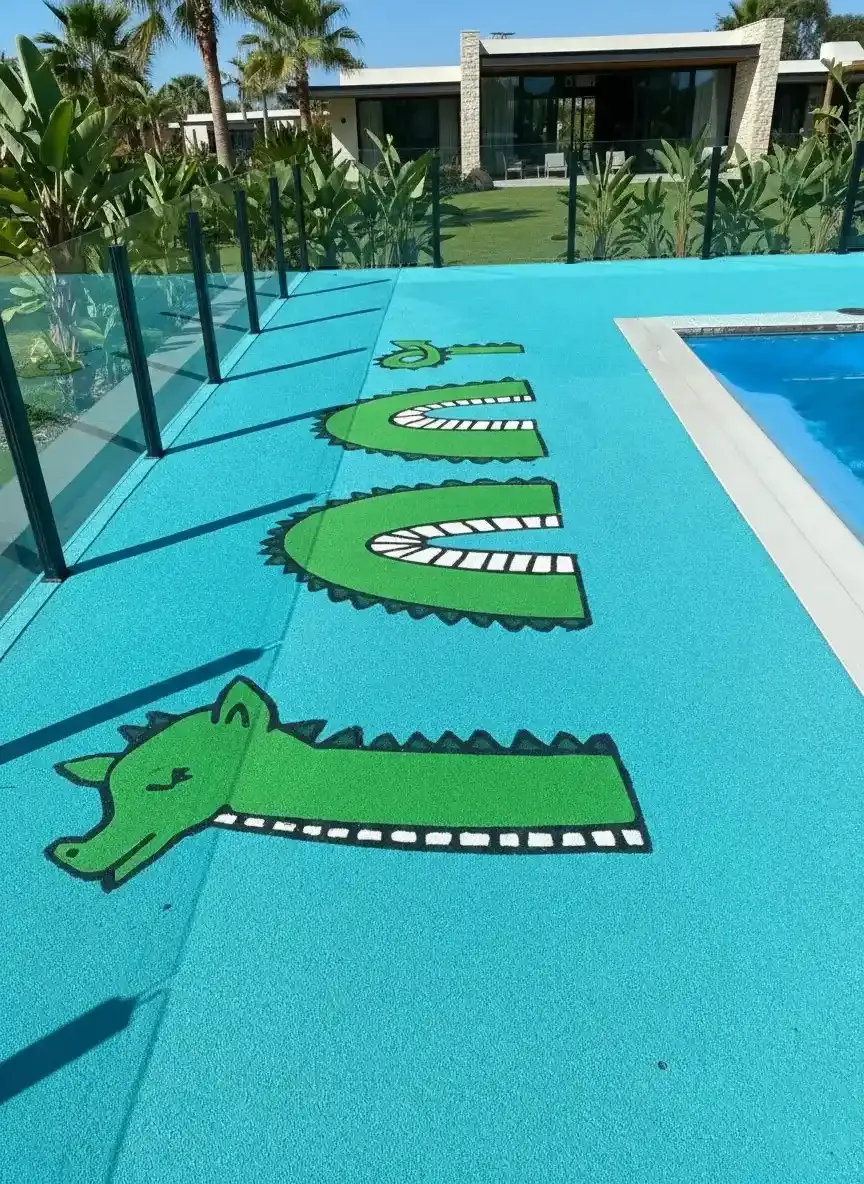
Light blends and blues tie the deck to the water and stay cooler in the sun than dark shades.
More answers on the FAQ page.
An overlay may be suitable if the concrete and its preparation meet the requirements of the selected system. Ask an installer to assess condition, movement, joints and drainage before any materials are specified. An overlay does not fix an unsound base.
No. Resin Rubber supplies materials. Tell us where the project is and we will check whether an approved installer covers your area. The installer assesses the deck and quotes the work.
If you are a homeowner, request an approved installer rather than treating this as a DIY job. Contractors can buy materials from us directly and should ask about installer training and the data sheets for the system they plan to install. Training alone does not make a system suitable for a site.
Resin rubber is naturally slip-resistant when wet and soft underfoot, and is widely used around pools, splash pads and wading areas. Slip resistance still depends on the specified system, the surface texture, drainage and upkeep, and no surface removes the chance of slipping. Discuss wet-area suitability and cleaning with your installer.
Lighter colors generally stay cooler in direct sun than dark ones. Frost, Concrete, Sarasota and Sea Glass are common light choices for pool surrounds. Compare physical samples on site in afternoon sun before deciding.
Next step
Request an approved installer and share the location, the size of the deck and what the existing surface is. Contractors sourcing materials can contact the materials team directly.