Choosing a pool deck color: heat, look and why samples matter
Quick answer
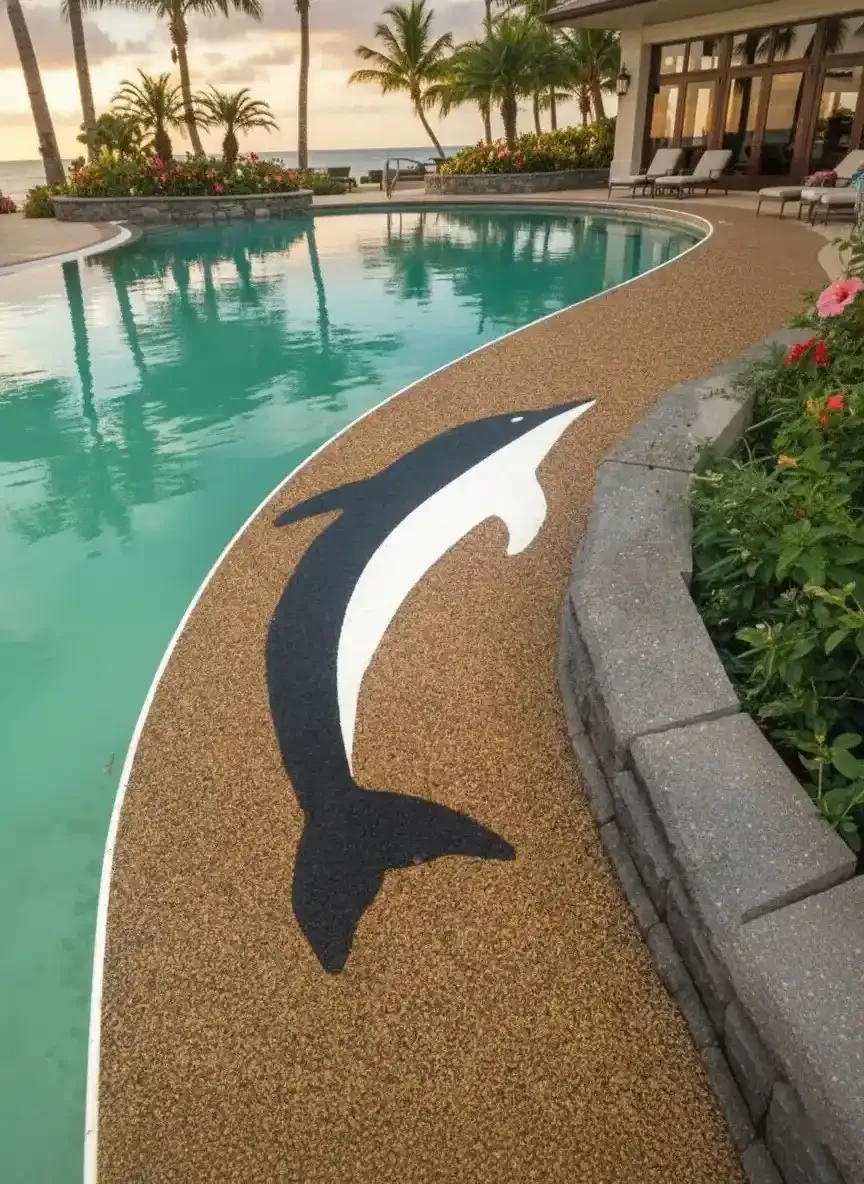
Lighter rubber colors generally stay cooler underfoot in direct sun than dark ones, which matters on a barefoot pool deck. Pale blends and blues are common around pools. Screens and printed charts do not show granule color accurately, so compare physical samples on site in afternoon sun, next to the coping, paving and planting, before confirming the order.
Key takeaways
- Lighter colors generally stay cooler underfoot in direct sun than dark ones.
- Frost, Concrete, Sarasota and Sea Glass are common light choices for pool surrounds.
- Compare physical samples on site, in afternoon sun, against the coping, planting and house.
- Solid colors give an even finish; mixed blends give a speckled, stone-like look.
- Slip resistance depends on the specified system, texture, drainage and upkeep, not on color.
For a barefoot pool deck, start with lighter colors, because lighter colors generally stay cooler underfoot in direct sun than dark ones. Then decide the look, and settle the final choice with physical samples on site in afternoon sun. Screens do not show granule color accurately.
Heat first
Any outdoor surface warms up in direct sun, and darker colors get warmer than light ones. On a pool deck people walk barefoot, so this is the practical reason to look at pale colors first. Shade, planting and the layout of the area matter as much as the color. Resin Rubber does not publish surface temperatures for its colors, so the claim here is the general one: lighter generally stays cooler.
Light colors to sample first
From the pool deck page, the light and pool-friendly picks:
| Color | Type |
|---|---|
| Frost | Mixed blend |
| Concrete | Mixed blend |
| Sarasota | Mixed blend |
| Sea Glass | Mixed blend |
| Light Grey | Solid |
| Light Blue | Solid |
| Resin Rock Blue | Solid |
| Teal | Solid |
Light blends and blues tie the deck to the water and stay cooler in the sun than dark shades. Browse all color options.
Solid or blend
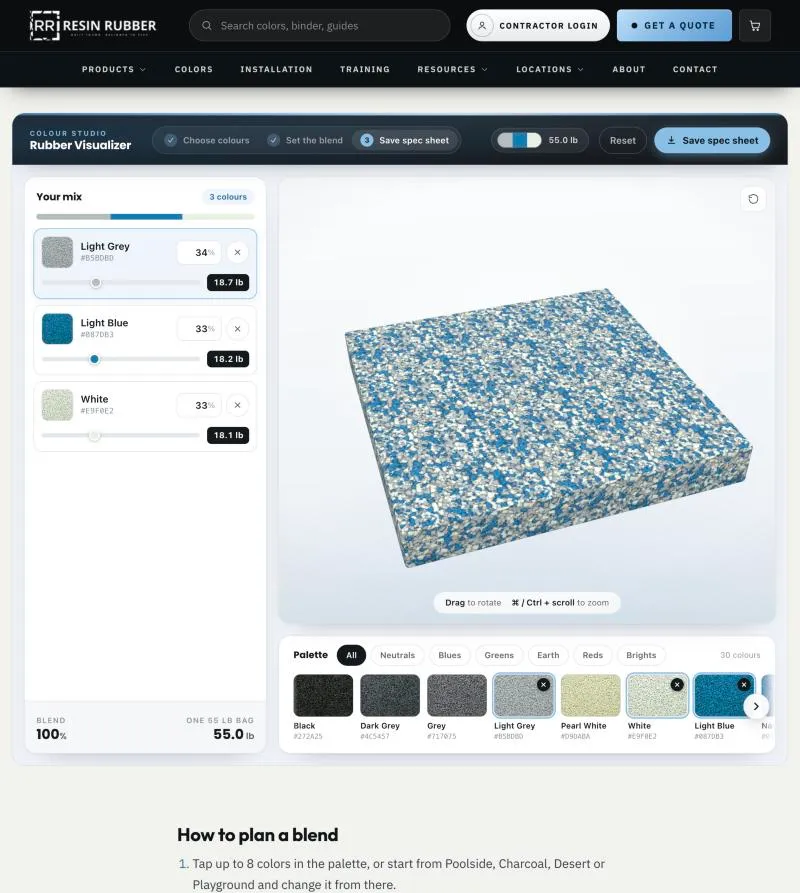
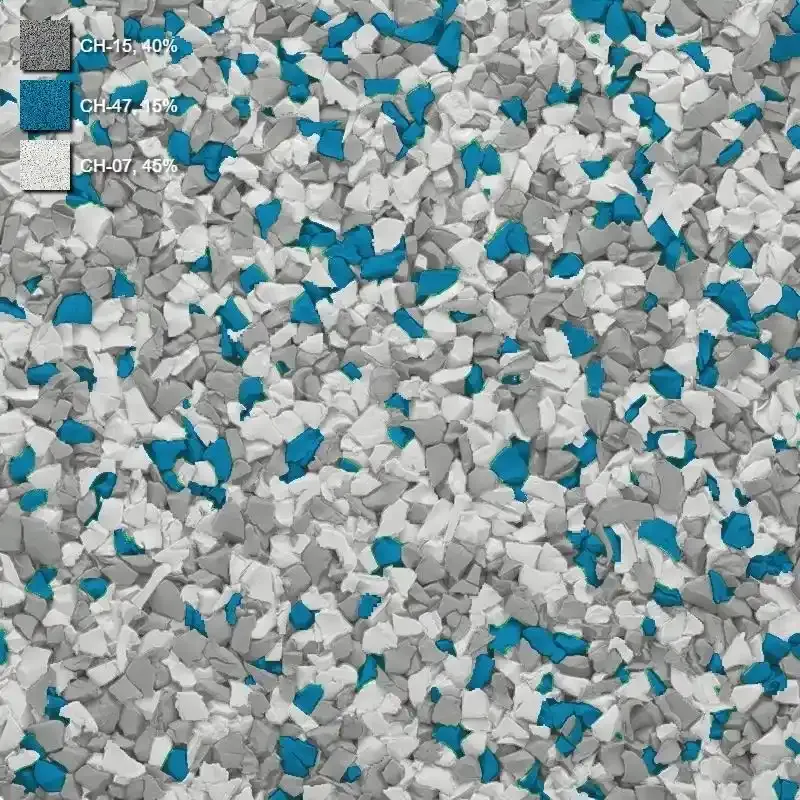
Solid colors are one shade per bag and give a flat, even finish. Mixed blends combine two to four colors to a published recipe for a speckled, stone-like look. Both are the same EPDM rubber and install the same way, so choose on appearance and how the deck sits with the coping, paving, planting and house. Compare them in solid or mixed color EPDM granules. To try your own combination, use the rubber visualizer and see designing a custom blend.
How to compare samples properly
- Request physical samples of two or three candidates.
- Put them on the deck itself, next to the coping and the paving.
- Look in afternoon sun, when the surface is hottest and glare is strongest, and again in shade.
- Confirm the final choice with your installer.
Color is not slip resistance
Resin Rubber’s Contractor Edition describes the surface as naturally slip-resistant when wet and soft underfoot, suited to pool decks, splash pads and wading areas. A light color does not change that, and it does not make a deck safer when wet. Slip resistance depends on the specified system, the surface texture, drainage and upkeep. No surface removes the chance of slipping. Discuss wet-area suitability and cleaning with your installer, and plan how the deck drains before the surface goes down. Pool chemistry, direct sun and standing water also affect which binder is specified.
Color and binder
Pair UV-stable aliphatic binder with the granules on any layer that stays in the sun, so the color stays true instead of yellowing. See aliphatic vs aromatic binder.
Next step
Read the pool deck surfacing guide for what to settle before ordering, then request an approved installer with your location, the size of the deck and what it is made of today. Resin Rubber supplies materials and does not install.
Frequently asked questions
Which colors stay coolest around a pool?
Lighter colors generally stay cooler in direct sun than dark ones. Frost, Concrete, Sarasota and Sea Glass are common light choices for pool surrounds. Compare physical samples on site in afternoon sun before deciding.
Is a rubber pool deck slippery when wet?
Resin rubber is widely used around pools and splash pads, but slip resistance depends on the specified system, the surface texture, drainage and upkeep. No surface removes the chance of slipping. Discuss wet-area suitability and cleaning with your installer.
Can I match the pool tile or school colors?
Often. The 28 solid colors cover most palettes, and larger commercial or municipal jobs can ask about a custom blend ratio. Check the match against physical samples before the order is placed.
Will the color fade?
EPDM granules are made to resist UV, and pairing them with UV-stable aliphatic binder keeps the surface from yellowing. Some change over years in strong sun is normal for any outdoor material.