Solid or mixed color EPDM granules: how to choose
Quick answer
Solid colors are one shade per bag and give a flat, even finish. Mixed blends combine two to four colors to a published recipe for a speckled, stone-like look. Both are the same EPDM material and install the same way, so the choice is about appearance, heat in the sun and how the surface sits with its surroundings. Always compare a physical sample on site.
Key takeaways
- Solid and mixed colors are the same EPDM material and install the same way; the difference is the look.
- Lighter colors generally stay cooler in direct sun than dark ones.
- Screens do not show granule color accurately, so compare physical samples on site.
- Blend recipes are published by color code and percentage, so a blend can be reordered to match.
Choose solid colors for a flat, even finish and blends for a speckled, stone-like look. Both are the same EPDM rubber and install the same way, so the decision is about how the surface should look and how it sits with the buildings, paving and planting around it.
What the two ranges are
Solid colors are one shade per bag. EPDM granules are dyed a single shade all the way through, and laid with a resin binder they give one flat, even color. Browse them on the solid color page.
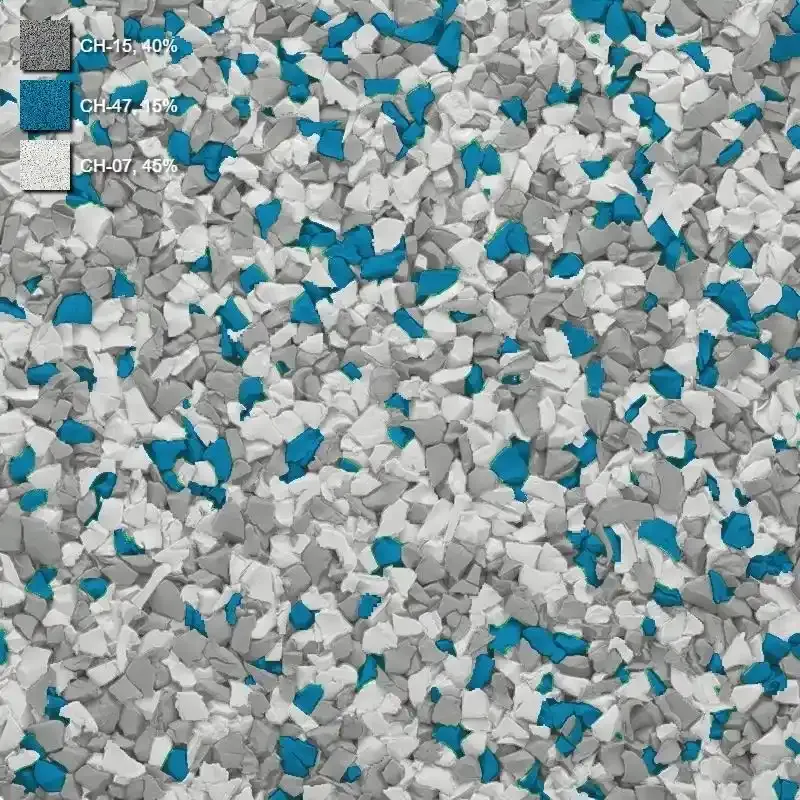
Mixed blends combine two to four colors to a published recipe. The result is a speckled, stone-like look. Each recipe is published by color code and percentage on the color options page, so a blend can be matched again on a later order. See the mixed color range. In total there are 28 solid colors and 12 blends.
How to choose
| If you want | Lean toward | Why |
|---|---|---|
| A clean, uniform surface or a bold zone | Solid | One shade, one flat finish |
| A natural, stone-like surface that hides small marks | Blend | The speckle breaks up the surface |
| Borders, logos, zones, play areas | Solid, often combined | Solid colors give clear edges between zones |
| A surface that picks up house or paving colors | Either | Compare samples against the real materials |
The first three rows describe how the two looks differ; they are guidance, not performance claims.
Heat in the sun
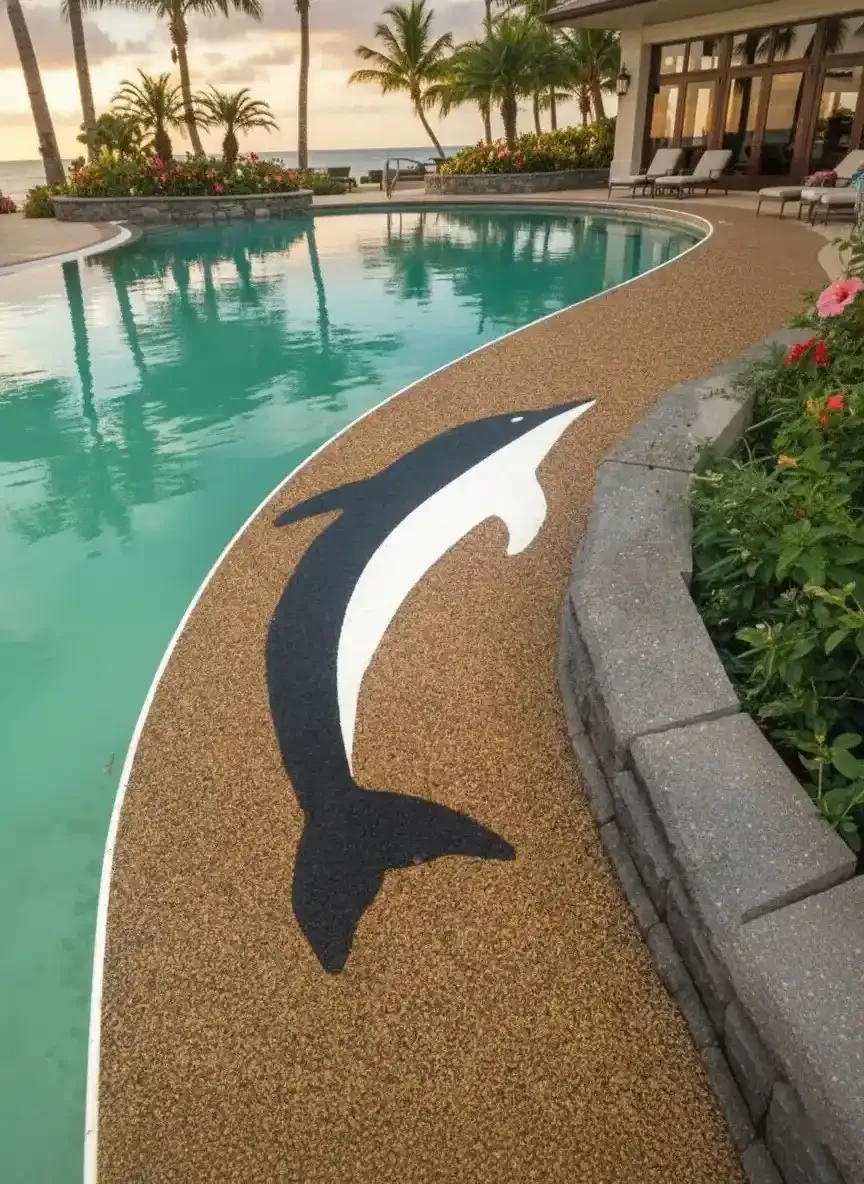
Lighter colors generally stay cooler underfoot in direct sun than dark ones. That matters for pool decks and anywhere people walk barefoot. Frost, Concrete, Sarasota and Sea Glass are common light choices for pool surrounds. A pale blend and a pale solid behave similarly. It is the overall lightness that counts.
Always check a physical sample
Screens do not show granule color accurately. A color that looks right on a monitor can look different on site. So:
- Request physical samples of your shortlist.
- Look at them on site in afternoon sun, and again in shade.
- Hold them against the paving, coping, walls and planting.
- Agree the final blend with your installer before the order is placed.
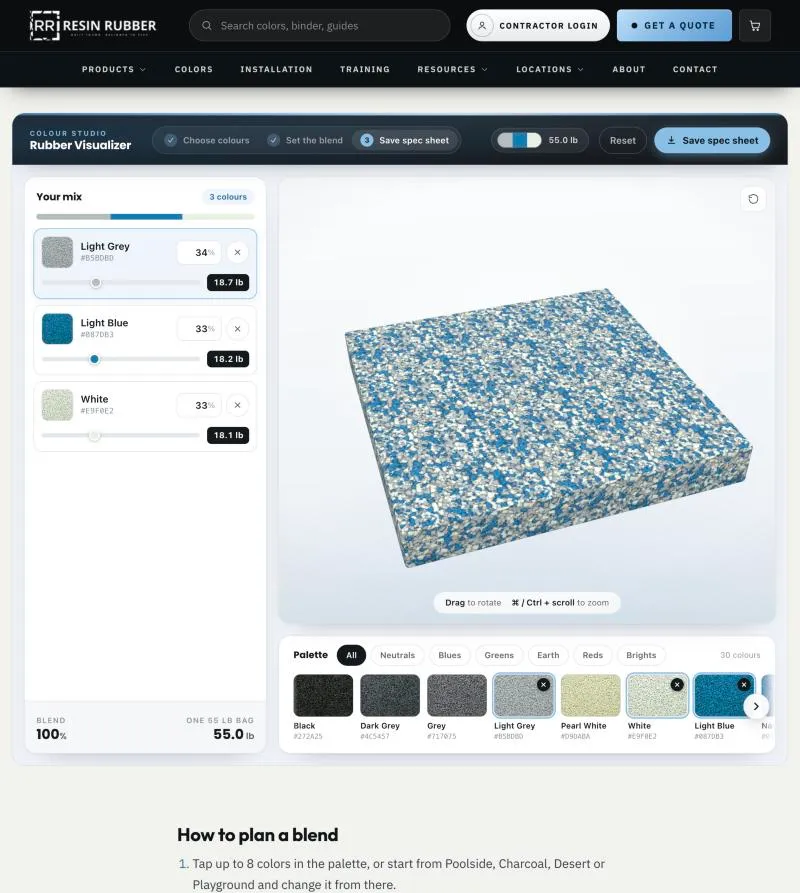
You can also try combinations of up to eight solid colors in the rubber visualizer, which shows a preview on a 3D slab and gives pound weights per 55 lb batch.
Matching school or brand colors
Often it can be done. Check the match against physical samples before the order is placed. Larger commercial or municipal jobs can ask the team about a custom blend ratio.
Where to go next
- Compare the two granule materials in EPDM vs TPV.
- Planning a pool deck? See pool deck surfacing.
- Ready for samples? Contact the team.
Frequently asked questions
Are mixed colors harder to install than solid colors?
No. Solid and mixed colors are the same EPDM material and install the same way. A blend is pre-mixed to a published recipe, so there is no extra mixing of colors on site.
Can I design my own blend?
You can try combinations of solid colors in the rubber visualizer, which gives pound weights per 55 lb batch. Larger commercial jobs can also ask about a custom blend ratio. Check any blend against a physical sample before ordering.
Will the color on my screen match the finished surface?
Not exactly. Screens and printed charts cannot show granule color accurately. Request a physical sample and look at it on site, in the light the surface will actually get.