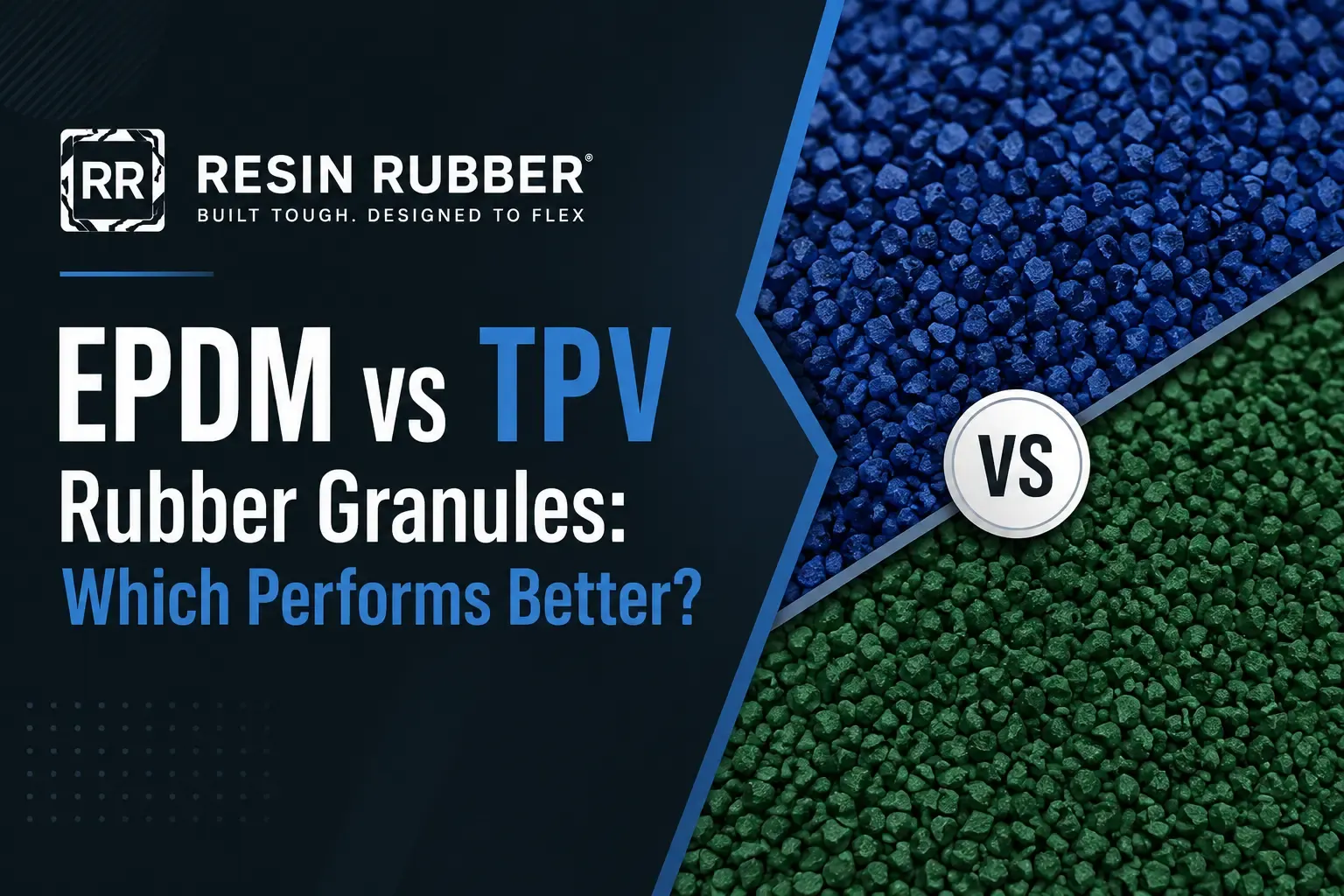
EPDM vs TPV rubber granules: which performs better?
Quick answer
EPDM rubber granules outperform TPV granules on UV resistance, color retention, elasticity, and lifespan because EPDM is a true vulcanized rubber while TPV blends rubber into a thermoplastic base that fades and stiffens faster in sun and heat. TPV costs less upfront but generally needs replacement sooner outdoors.
Key takeaways
- EPDM resists UV fading far better than TPV, which matters most in hot, sunny climates like Florida, Texas, and Arizona.
- TPV costs less upfront but stiffens and loses elasticity faster, often shortening service life outdoors.
- EPDM's cushioned feel makes it the standard choice for playgrounds and other fall-height surfaces.
- Ask any supplier for UV and hardness test data rather than judging color stability by eye.
- The cheaper material upfront isn't always the cheaper material over the life of the surface.
EPDM rubber granules beat TPV on nearly every property that matters once a surface sits outside in real weather: color retention, UV resistance, elasticity, and total lifespan. TPV costs less to buy because it blends rubber into a thermoplastic base rather than using true vulcanized rubber, but that thermoplastic content is also why it stiffens and fades faster under sustained heat and sun. For playgrounds, pool decks, sports courts, and any surface expected to hold up for years, EPDM is the safer specification.
What is EPDM rubber?
EPDM stands for ethylene propylene diene monomer, a synthetic rubber used in roofing membranes, gaskets, seals, and automotive parts for decades. Once it’s ground into granules for surfacing, EPDM keeps the traits that made it useful in those other industries: strong resistance to UV light and ozone, plus a flexible, slightly springy texture that holds up under repeated foot traffic. Resin Rubber supplies EPDM granules in 55 lb bags, in 28 solid colors and 12 pre-blended mixed-color options, for use in poured-in-place rubber surfacing.
Because EPDM starts out as a genuine rubber compound rather than a rubber-plastic blend, its hardness, color, and particle size can be adjusted during formulation without giving up UV and ozone resistance. That’s part of why EPDM turns up across such a wide range of outdoor products, from roof flashing to pond liners, well beyond surfacing granules alone.
What is TPV rubber?
TPV, short for thermoplastic vulcanizate, is a newer material that blends small rubber particles into a thermoplastic base. It isn’t a true rubber in the way EPDM is, and that hybrid structure explains most of the performance gap between the two. TPV granules are generally cheaper to produce, which is why they show up in budget-focused projects, but the thermoplastic portion behaves differently once it sits in direct sun for a season or two.
Because the thermoplastic portion can be melted and reshaped, TPV is cheaper and faster to process at scale, which is where most of its cost advantage comes from. The tradeoff is that thermoplastics generally hold up worse under years of continuous UV and heat exposure than a fully vulcanized rubber like EPDM, since the plastic component wasn’t built for that kind of sustained outdoor duty.
EPDM vs TPV at a glance
| Property | EPDM | TPV |
|---|---|---|
| UV resistance | High, formulated to resist fading | Lower, thermoplastic base degrades faster in sun |
| Elasticity over time | Stays flexible for years | Stiffens as heat cycles add up |
| Feel underfoot | Cushioned, rubbery | Firmer, less forgiving |
| Typical upfront cost | Higher | Lower |
| Expected service life | Longer | Shorter, especially in hot climates |
How do EPDM and TPV compare on color and UV resistance?
This is where the difference shows up first. EPDM is formulated specifically to resist UV degradation, so its color stays close to the original shade for years, even under the kind of sun exposure common in Florida, Texas, or Arizona. TPV tends to fade noticeably sooner under the same conditions, because the thermoplastic base is more sensitive to prolonged UV exposure than vulcanized EPDM rubber. How much either material fades in practice still depends on the specific formulation, the installation, and ongoing maintenance, so ask any supplier for documentation on UV testing rather than taking color stability on faith.
Which material holds up longer under repeated use?
EPDM keeps its elasticity for a long time, which is what keeps a rubber surface feeling consistent underfoot years after installation instead of turning brittle. TPV, because of its thermoplastic content, tends to stiffen faster as it goes through repeated heat cycles, which shortens the practical lifespan of the surface before granules start cracking or losing bounce. On a playground, sports surface, or commercial walkway meant to perform for a decade or more, that durability gap matters more than the upfront price difference.
How do EPDM and TPV handle heat and general weathering?
Beyond UV exposure alone, EPDM generally handles temperature extremes and ozone exposure better than TPV. This matters most in climates with intense summer heat and strong sun, where surface temperatures on outdoor rubber surfacing can climb well above the surrounding air temperature. Repeated cycles of heating during the day and cooling at night put more stress on TPV’s thermoplastic component than on EPDM’s vulcanized rubber structure. TPV can perform adequately in milder climates or lower-exposure settings, such as a shaded or seasonal installation, but it isn’t the material to specify for a surface that sits in direct, year-round sun.
Does hardness feel different between EPDM and TPV?
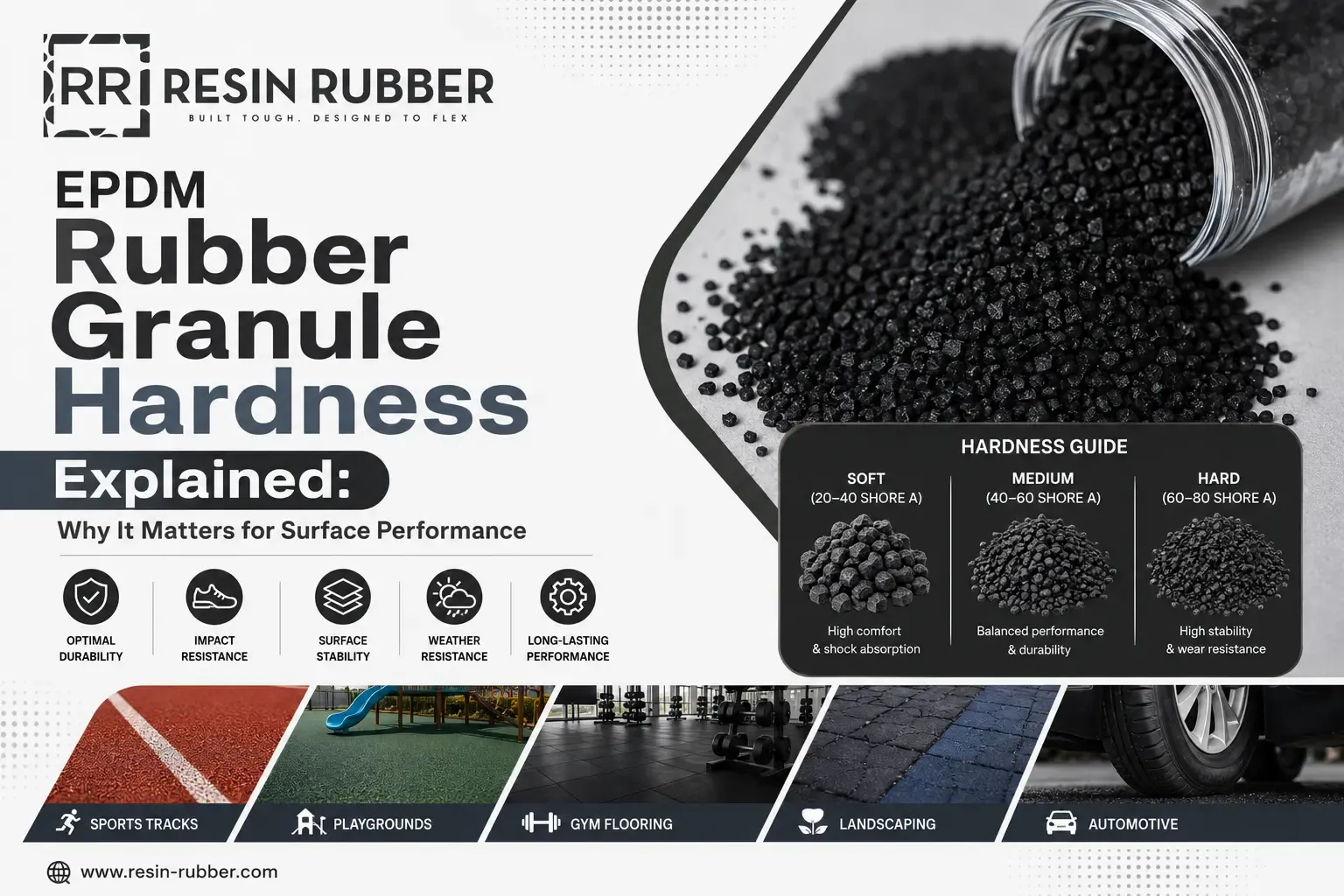
EPDM has a naturally cushioned, rubbery feel, part of why it remains the standard for impact-absorbing surfaces like playgrounds and running tracks. Hardness can also be adjusted during formulation depending on the application. Our guide to EPDM rubber granule hardness explains how that Shore A rating is measured and chosen for different projects. TPV surfaces tend to feel firmer and less forgiving once installed, which works against fall protection, where cushioning is a safety requirement rather than a comfort preference.
Is TPV actually cheaper once you account for the full project?
TPV granules usually cost less upfront, which is the main reason they show up in budget-conscious projects. EPDM costs more because of its raw material and processing, but that cost buys better UV stability, elasticity retention, and a longer service life. On a project where the surface needs to look and perform well for years, not one season, the higher initial cost of EPDM is often recovered through less fading, fewer repairs, and a longer gap before resurfacing. Pairing EPDM granules with a compatible resin binder also affects how the finished surface performs, so it’s worth reviewing binder options at the same time you compare granule types. Total cost also depends on labor. If a TPV surface needs replacing years sooner than an EPDM one, the second round of base prep and installation labor usually costs more than the difference in material price ever saved.
Which one should you choose for your project?
For playgrounds, sports courts, walkways, rooftop terraces, and any outdoor surface that sees consistent sun, EPDM is the more proven choice. TPV can make sense for a lower-budget, lower-exposure, or shorter-term project, but it isn’t the material to reach for when a surface needs to handle years of heat, UV, and heavy use. Suitability always depends on the base, the specification, the installation, and ongoing maintenance, so talk through your specific project with a supplier or installer before ordering material. Our guide on what to look for when buying rubber granules covers the quality signals worth checking regardless of which material you land on. A pool deck or patio adds another variable worth weighing: sustained moisture alongside UV exposure, which is one more reason EPDM’s weathering resistance carries real weight for those applications, not just for playgrounds.
How can you verify a supplier’s claims about EPDM quality?
Anyone can say their EPDM resists fading. Ask for the specifics instead. A supplier who stands behind their material should be able to share a technical data sheet listing hardness, density, and particle size for each color or blend, along with information on how the compound is tested for UV and weather resistance. It’s also reasonable to ask how consistent hardness and color are from batch to batch, since raw material sourcing can shift slightly over time even within the same product line. Requesting a physical sample before committing to a bulk order lets you compare color and texture directly, rather than relying on a photo or a swatch on a screen.
Ready to compare the two side by side? Request physical samples of our EPDM granules through Resin Rubber’s contact page, and our materials team can help you match a solid or mixed color to your project’s climate and traffic level.
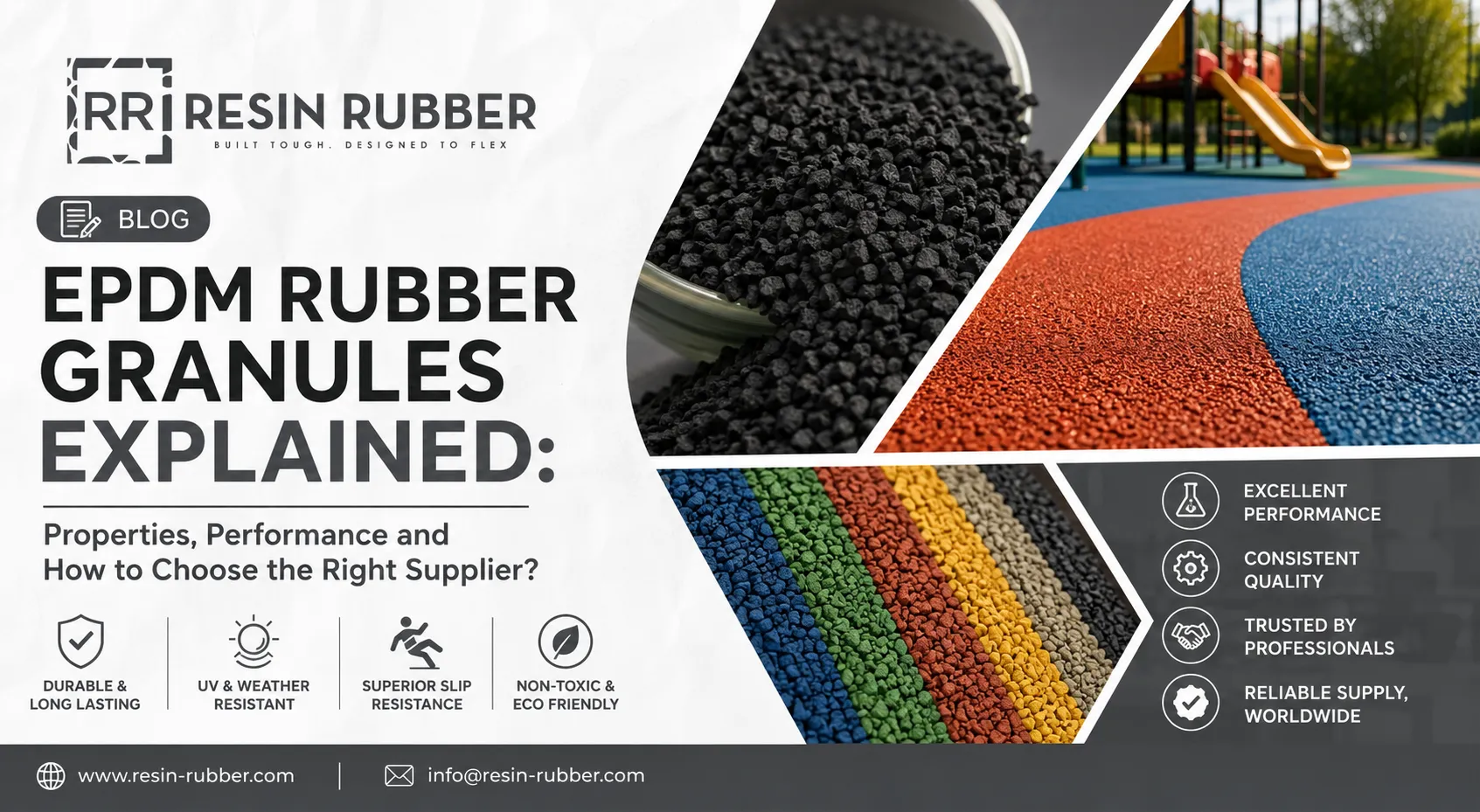
Related guides: Aliphatic vs aromatic binder, solid or mixed color EPDM granules and the EPDM rubber granules: properties, performance and supplier guide.
Frequently asked questions
Is TPV the same thing as recycled rubber?
No. TPV is a thermoplastic vulcanizate that blends rubber particles into a plastic base, while EPDM is a true synthetic rubber. Recycled rubber, often SBR, is a separate category again, usually used as a lower cost base layer rather than a visible top coat.
Can EPDM and TPV granules be mixed in the same surface?
They generally shouldn't be, since the two materials wear and fade at different rates. Mixing them can leave a surface with visible color mismatches and uneven texture within a year or two, even if it looks fine on installation day.
How long do EPDM rubber granules typically last outdoors?
With correct base preparation, specification, and maintenance, EPDM surfacing is built to perform for years outdoors. Exact lifespan depends on traffic levels, climate, and installation quality, so ask your installer what service life they expect for your application.
Does TPV ever make sense over EPDM?
TPV can work for short-term, low-budget, or low-exposure projects where fading and long-term elasticity matter less. For anything expected to hold its color and cushioning for years in direct sun, EPDM remains the more reliable option.
Does climate affect which material you should choose?
Yes. In hot, sunny climates such as Florida, Texas, or Arizona, EPDM's UV and heat resistance make a bigger practical difference than they would in a shaded or seasonal installation. TPV can be a reasonable option in milder or lower-exposure settings where fading and stiffening matter less over the life of the project.