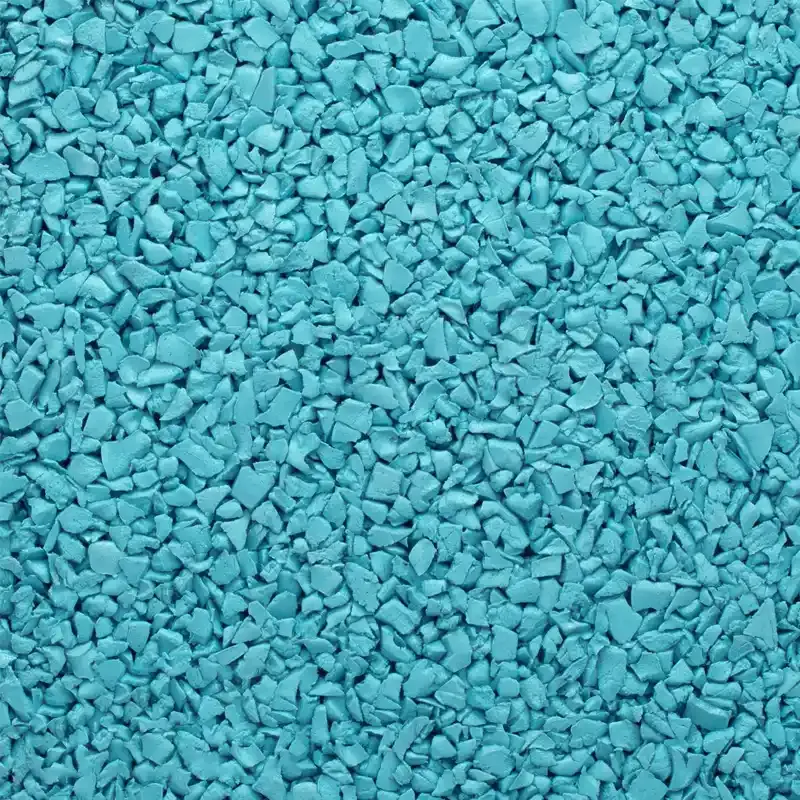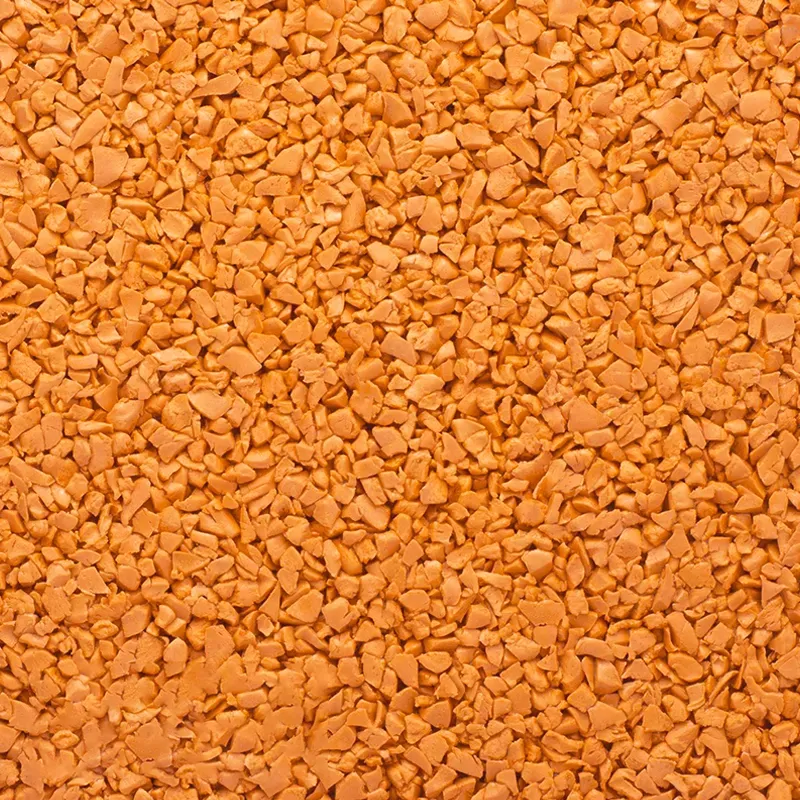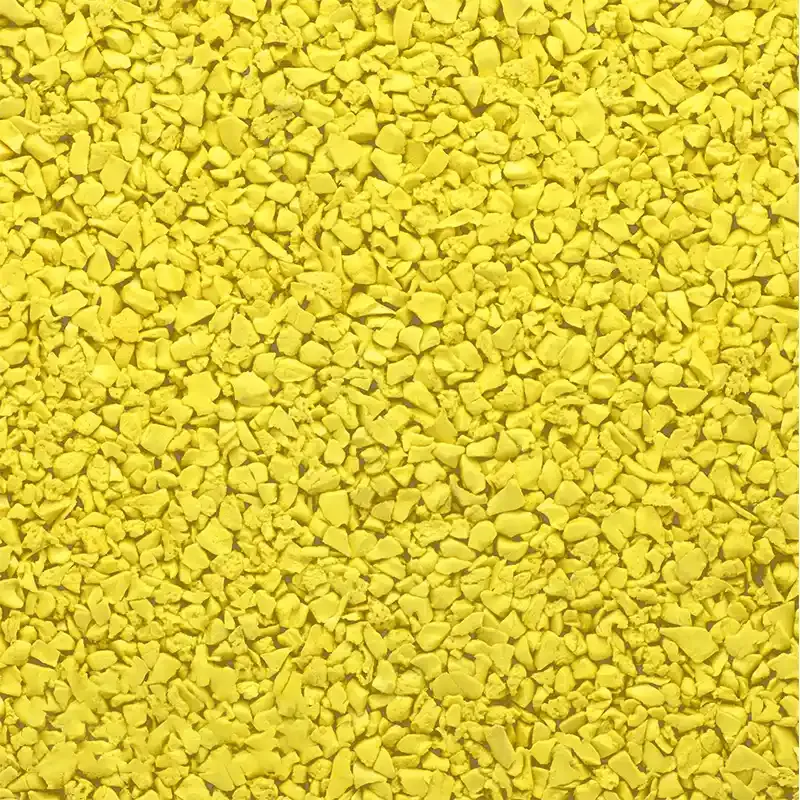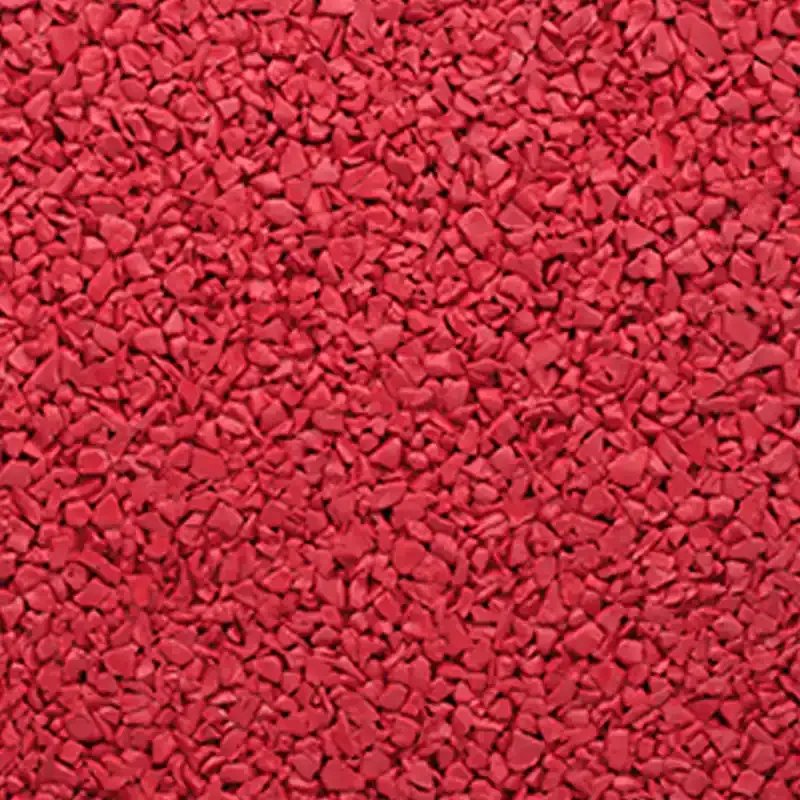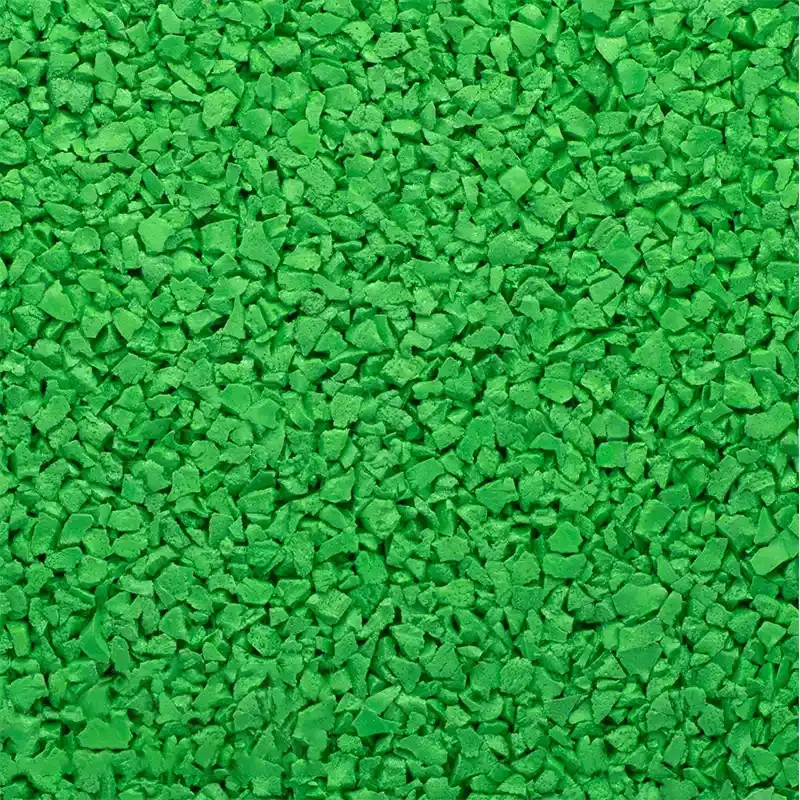
Granny Smith 55LB
Solid color, 55 lb

Materials for play areas, splash pads and outdoor fitness zones across the U.S. and Canada. We supply the granules, binders and tools, and connect you with an approved installer who buys them from us.
In short
Playground surfacing in poured rubber is a two-layer system laid on site: a cushioning base layer, then a wear layer of colored EPDM granules bound with resin. Its thickness follows the fall height of the equipment above it. Resin Rubber supplies the materials; an approved installer specifies and installs a tested system.
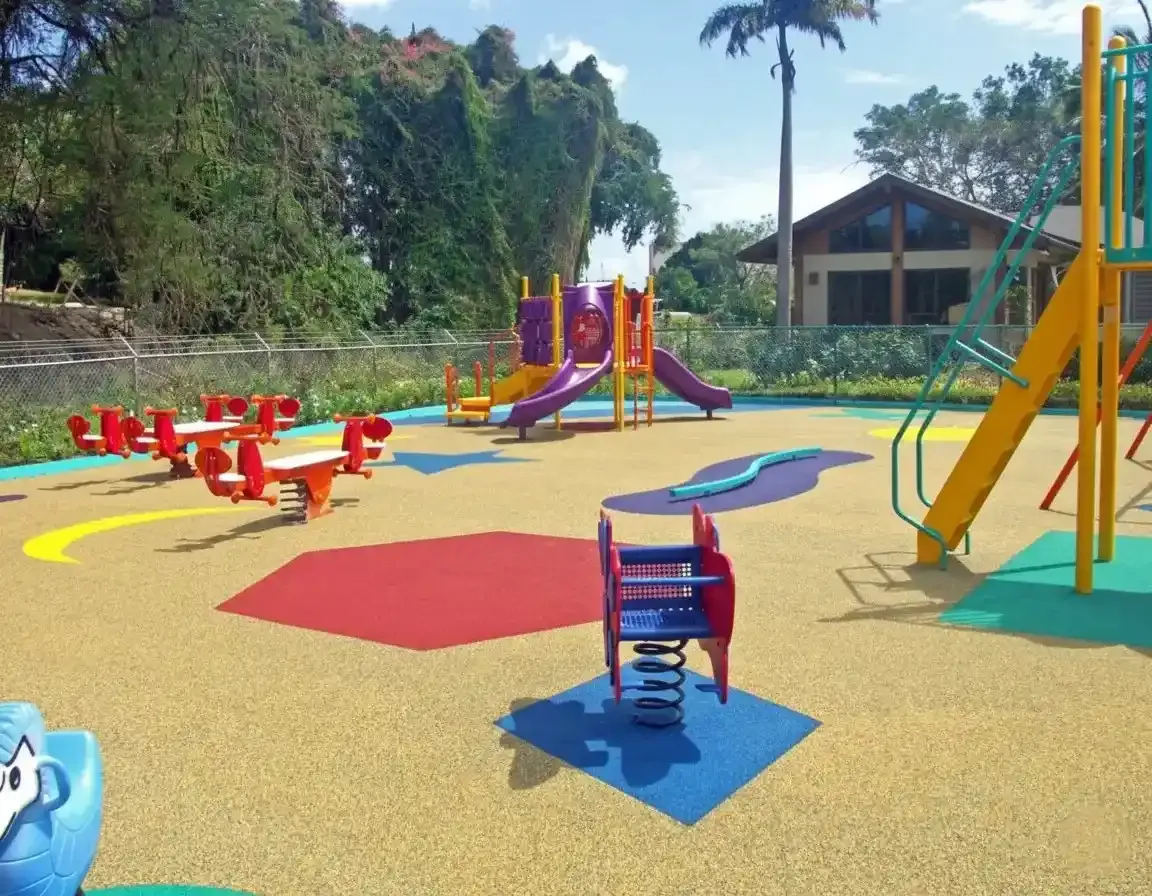
This is the part that decides your budget, so settle it first. Play equipment has a fall height: the highest point a child can reach and fall from. The surface underneath has to be built to absorb that fall, and a taller fall means a thicker system. A surface poured at the wrong thickness looks exactly like one poured at the right thickness.
The way that is proven is a laboratory test, usually to ASTM F1292, on a complete build-up: a stated wear layer over a stated base layer, over a stated sub-base, at a stated thickness. The result is a critical fall height for that build-up, not for rubber in general. Ask your installer which tested system they are installing, at what thickness, and for the test report that covers it. Get it in writing before work is priced, and keep it with the site records.
Resin Rubber supplies the EPDM granules and binders that go into these systems. We do not certify a fall height for a surface we have not tested or installed, and no supplier honestly can from a bag alone.
Settle these with your installer before anything is ordered:
Preparation, sequence and curing are covered in the installation guide.
Quantities depend on the area, the thickness your specification calls for and how much of it is graphics. Send the measurements and the equipment fall heights to the materials team and we will work out what the job needs. Approved customers can also work it out themselves in the material calculator.
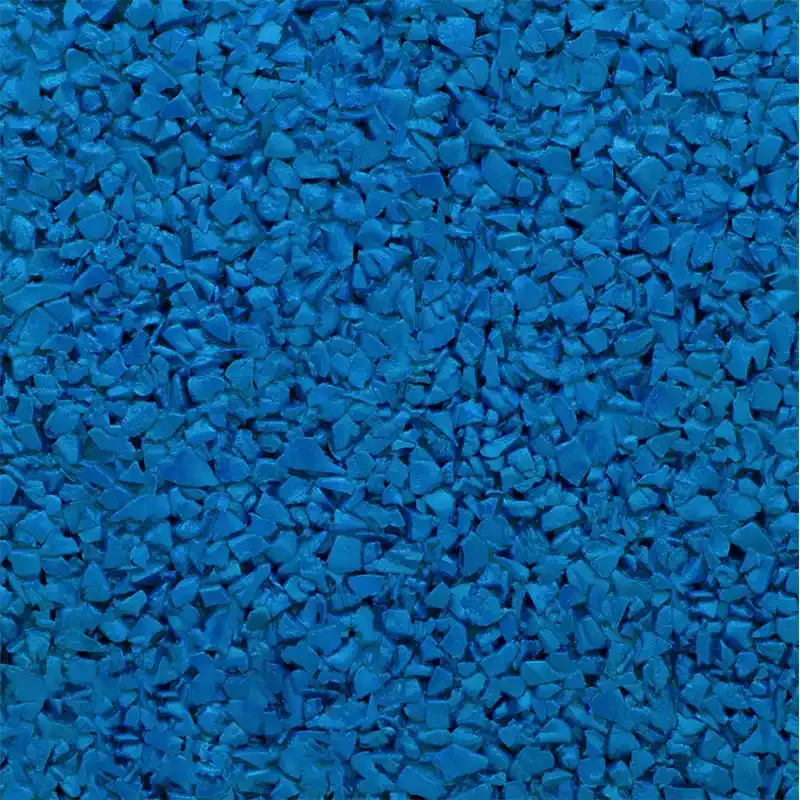
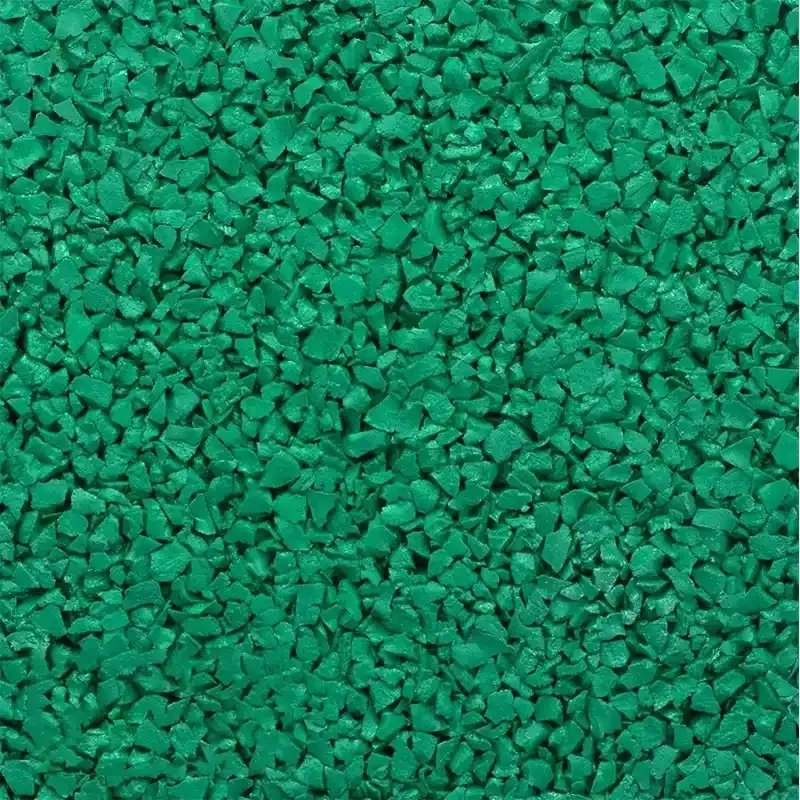
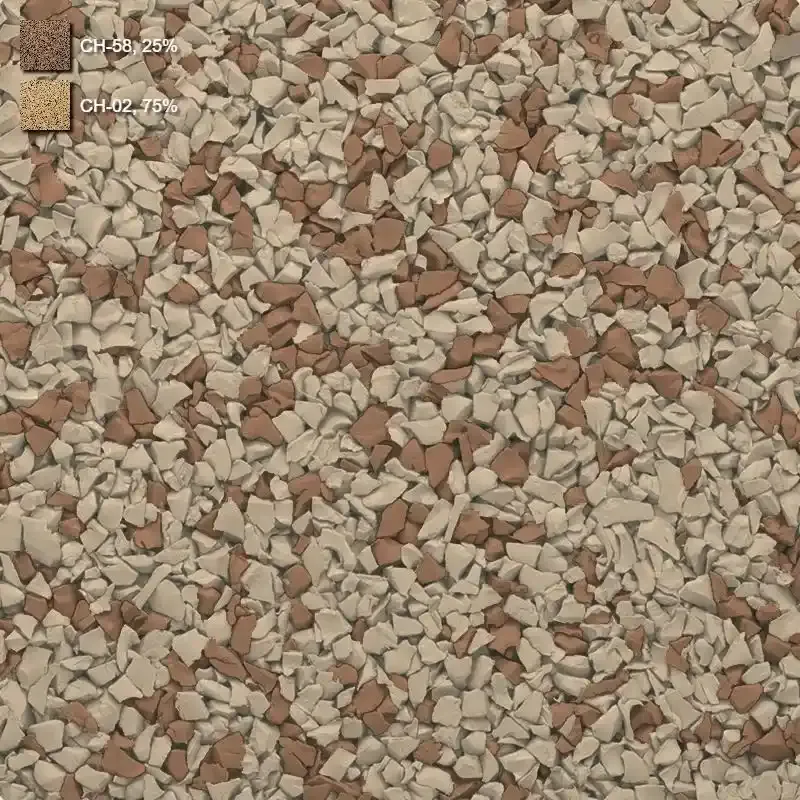
Bright zones for play and graphics, with lighter blends where the sun is strong. Compare samples outdoors before choosing.

More answers on the FAQ page.
It is a rubber surface mixed and laid on site rather than delivered as tiles or mats. Crews trowel a base layer of rubber granules bound with resin, then a wear layer of colored EPDM granules on top. It cures into one continuous surface with no joints between pieces, which is why it suits play areas with curves, equipment posts and graphics.
Thickness follows the fall height of the equipment, not the size of the area. The taller the highest play surface a child can reach, the thicker the system has to be. Your installer works back from the equipment manufacturer's stated fall height and the system's own test data. Ask for that data in writing before you agree a specification: thickness cannot be judged by eye or copied from another site.
No. A critical fall height belongs to a complete system tested to a standard such as ASTM F1292, at a stated thickness, over a stated base, installed as specified. Resin Rubber supplies the granules and binders that go into such a system. Ask your installer which tested build-up they are installing and for the current test report that covers it.
Sometimes. Poured rubber is laid over a prepared base, usually concrete, asphalt or a compacted aggregate base, and the base has to drain and stay stable. An installer assesses what is there now, including drainage, movement and edges, before anything is specified. A new surface does not fix a failing base.
No. We supply materials to contractors and dealers. Tell us where the project is and we will check whether an approved installer covers your area. Schools, parks departments and childcare operators usually go this route; contractors can buy materials from us directly and ask about installer training.
Any dark surface in direct sun gets hot, rubber included. Lighter colors generally stay cooler than dark ones, and shade, planting and the layout of the equipment matter as much as the color. Compare physical samples outdoors, in afternoon sun, before choosing.
Sweeping or blowing off leaf litter and grit, rinsing, and keeping drainage clear. Damage from vandalism or heavy point loads is repaired in place by an installer, who can patch a section rather than replace a whole area. Agree an inspection routine with whoever maintains the site.
Next step
Request an approved installer and share the location, the size of the area and the fall heights of the equipment. Contractors sourcing materials can contact the materials team directly.