Aliphatic vs aromatic resin binder: which one goes where
Quick answer
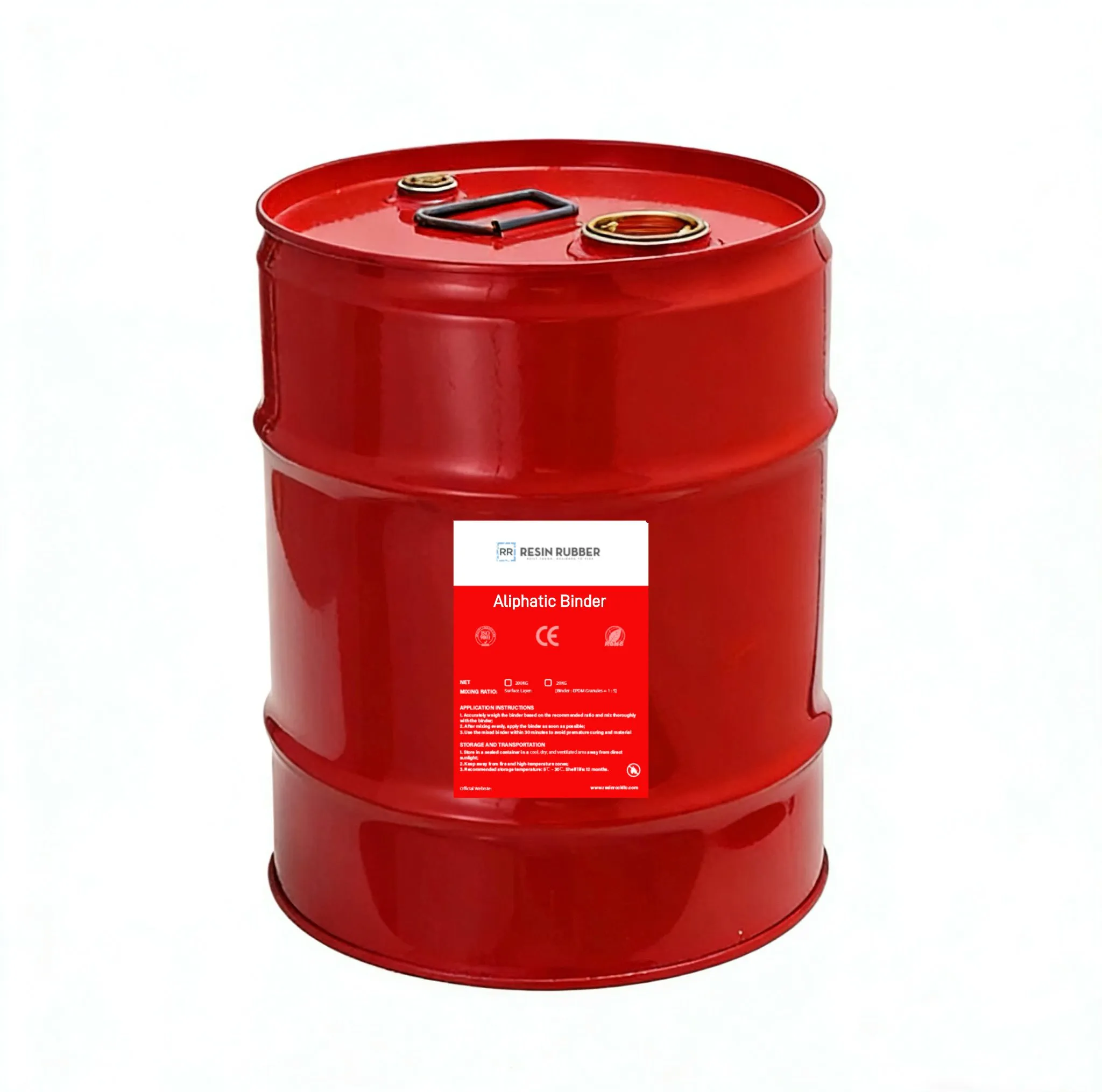
Aliphatic binder is UV stable and keeps granule color true outdoors, so it belongs on any layer that sits in the sun. Aromatic binder does the same structural job for less money but yellows in direct sun, so it suits base layers and covered work. Many projects use both.
Key takeaways
- Use aliphatic binder on any layer that stays in direct sunlight, because it does not yellow.
- Aromatic binder suits base layers, sub-surface bonding and anything covered by another material.
- Many projects use aromatic underneath and aliphatic on the exposed top layer.
- Binders are not interchangeable by name alone: confirm the role and compatibility with the materials team and read the data sheets.
Pick the binder by where the layer sits. A layer that stays in the sun needs UV-stable aliphatic binder, because it does not yellow. A layer that is buried under another layer, or kept out of direct sun, can use aromatic binder, which does the same structural job for less money.
That is the whole decision on most jobs. The rest of this guide covers what each binder is for, how they combine, and what to confirm before you order.
What the binder does
Poured-in-place rubber is made by mixing EPDM rubber granules with a resin binder and troweling the mix over a prepared base. The binder is the liquid that hardens as it cures and holds the granules together as one continuous surface. It is usually a polyurethane made to bond rubber granules.
Because the binder surrounds every granule, it is also what the sun reaches first. That is why binder type matters for outdoor color.
Aliphatic binder: for layers that stay in the sun
Aliphatic binder is the UV-stable option. It does not yellow in sunlight, so the color of the granules stays true on surfaces that live outdoors.
Use it for:
- the exposed wearing course and top layers
- pool decks, patios and pathways, and driveways
- any pale or bright color where a yellow cast would show
It costs more than aromatic binder. The extra money buys the UV stability.
Aromatic binder: for base layers and covered work
Aromatic binder does the same structural job as aliphatic for less money. It is not UV stable and will yellow in direct sun.
That makes it a good fit for:
- base courses
- sub-surface bonding
- layers kept out of direct sun, such as work covered by another material
Using both on one job
Many projects use both: aromatic binder underneath and aliphatic binder on the exposed top layer. The base layer carries the structure and is covered, so UV stability there adds cost without adding anything you can see. The top layer is the one the customer looks at every day.
| Aliphatic | Aromatic | |
|---|---|---|
| UV stability | UV stable, does not yellow | Not UV stable, yellows in direct sun |
| Typical role | Exposed wearing course and top layers | Base courses and layers kept out of direct sun |
| Cost | Higher | Lower |
| Works with | EPDM rubber granules, stone aggregate | EPDM rubber granules, stone aggregate |
Source: Resin Rubber product pages for the aliphatic and aromatic 5-gallon pails.
Before you order
Binders are not interchangeable by name alone. Before you commit to quantities:
- Ask the materials team to confirm the approved role, compatibility and quantity for your project.
- Request the current technical data sheet and safety data sheet for each binder. Specifications and handling instructions come from those documents.
- Check the system against the base and the use. Which layers are exposed to sun is a question for the specification, not a guess.
- Keep the safety guidance in view. See the safety policy.
For coverage per pail, application temperature, cure time and the mix ratio for each binder, ask the materials team for the current technical and safety data sheets. Those figures come from the data sheets, not from a summary like this one.
Where to go next
- Read how a batch is mixed in mixing EPDM granules and binder.
- See the full range on the resin binder page.
- Contractors can ask about installer training. Homeowners can request an approved installer.
Frequently asked questions
Can I use aromatic binder on the top layer to save money?
Only if the top layer is covered. Aromatic binder is not UV stable and yellows in direct sun, which changes how the granule color looks. Exposed surfaces such as pool decks, patios, pathways and driveways call for aliphatic binder.
Do I need both binders on one job?
Often, but not always. A common build uses aromatic binder for the base layer and aliphatic binder for the exposed wearing course. A thin single-layer job in full sun may need aliphatic only. The system your installer specifies decides it.
Where do I find the technical data for each binder?
Ask the materials team for the current technical and safety data sheets for the binder you plan to use. Specifications and handling details should come from those documents, not from a summary.