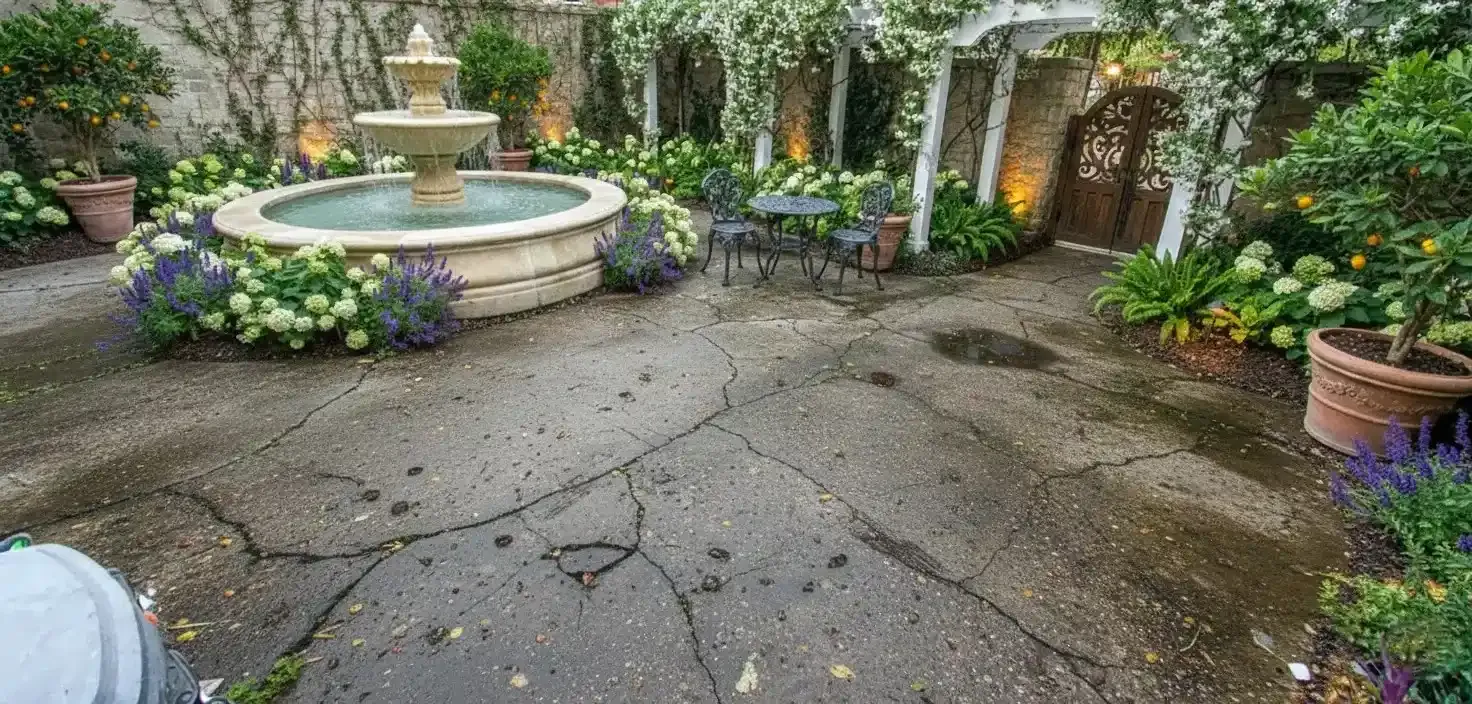
Is your concrete ready for a rubber surface? A base checklist

Quick answer
Resin rubber can often go over existing concrete when the concrete is structurally sound. An installer needs to assess cracks, movement, joints, drainage and surface contamination first. An overlay is not a substitute for repairing an unsuitable base, so the checks come before the material order.
Key takeaways
- An overlay may suit sound concrete. It does not fix a base that is moving, failing or badly contaminated.
- Five things decide it: condition, cracks and movement, joints, drainage and contamination.
- Walk the site with the installer before any materials are specified or ordered.
- Drainage still depends on the base and the falls around it, even though the cured surface is porous.
Often yes, but only if the concrete is sound. Resin rubber is laid over a prepared base, and an overlay does not repair a base that is moving, crumbling or badly contaminated. The assessment comes before the materials order, and it is the installer’s job.
This checklist covers what that assessment looks at, so you know what to ask about and what to expect on a site visit.
The five checks
1. Overall condition
Is the concrete structurally sound? Concrete, pavers and other bases are each prepared differently, so the installer needs to know what the existing surface actually is and what state it is in.
2. Cracks and movement
Cracking or movement has to be understood before anything is bonded over it. A hairline crack that has not moved is a different problem from a slab that is settling or heaving. The installer decides what repair or preparation the chosen system requires.
3. Joints
Existing expansion and control joints have to be accounted for, not just covered over. Agree how the new surface will treat each joint, and where edges, steps and level changes will finish.
4. Drainage
Where does water go now? Falls, drainage channels and run-off need to keep working after resurfacing. The cured rubber surface is porous, so water can pass through it, but how well the area drains still depends on the base underneath and the falls around it. Plan this before the surface goes down.
5. Surface contamination
Oils, coatings, dirt and anything else on the surface affect how the material bonds. The installer cleans, repairs and primes the base as the chosen system requires. The exact preparation for each system, including cleaning method, primer and moisture limits, comes from its technical data sheet and installation instructions, so ask the installer which apply to your job.
What the installer does with the answers
The standard sequence for a poured rubber installation starts with this assessment:
- Site assessment: existing surface, cracks, movement, drainage, access and the intended use.
- Specification: granules, binder, thickness and preparation confirmed for the base and the use. Colors are signed off against a physical sample.
- Base preparation: the base is cleaned, repaired and primed as the system requires. Edges, joints and level changes are set out.
- Mixing, laying and troweling.
- Curing and handover: curing time depends on the product and the weather.
The full sequence is on the installation guide.
Different surfaces, different questions
- Pool decks: pool chemistry, sun and standing water affect which binder is specified. See pool deck surfacing.
- Driveways and garages: bonded onto sound existing concrete or asphalt, so a worn surface does not have to be torn out first. See driveway surfacing.
- Wood and composite decks: applied over suitable decking with a breathable finish so moisture underneath can escape.
A short list to take on the site visit
- What is the base made of, and is it structurally sound?
- Which cracks have moved, and what is the repair?
- How will each joint, edge and step be handled?
- Where will water go after resurfacing?
- What cleaning and priming does the chosen system need?
- Which binder is specified for each layer? See aliphatic vs aromatic binder.
Next step
Homeowners can request an approved installer with their location and project details. Contractors can read about installer training and ask the materials team for the data sheets for the system they plan to install.
Frequently asked questions
Can resin rubber go over existing concrete?
Often, when the concrete is structurally sound. Cracks, movement, drainage and surface contamination need to be assessed first. An overlay is not a substitute for repairing an unsuitable base.
Does water drain through a resin rubber surface?
The cured surface is porous, so water can pass through it rather than sitting on top. How well the area drains still depends on the base underneath and the falls around it, so plan drainage with your installer before the surface goes down.
Who decides whether my base is suitable?
An installer assesses the site and specifies the preparation. Resin Rubber supplies materials and does not install, but the team can connect homeowners with an approved installer.