What should you know about density and bulk density in rubber granules?
Quick answer
Density measures how tightly packed the rubber is inside each EPDM granule, in grams per cubic centimeter, and typically runs 1.2 to 1.5 for quality material. Bulk density measures the weight of loosely poured granules per liter, typically 500 to 650, and determines how much material a project needs to order.
Key takeaways
- Density measures the rubber itself, in grams per cubic centimeter; bulk density measures loose granules per liter, air gaps included.
- Quality virgin EPDM density typically runs 1.2 to 1.5 g/cm3; bulk density typically runs 500 to 650 g/L.
- Higher density generally means better compression resistance and a longer-wearing surface.
- Bulk density, not density, determines how many bags or totes to order for a given area.
- Ask suppliers for current technical data sheets rather than relying on outdated specs.
Density measures how tightly packed the rubber is inside a single EPDM granule, in grams per cubic centimeter. Bulk density measures how much a loose pile of granules weighs per unit volume, in grams per liter, once the natural air gaps between granules are included. Density tells you about the strength and expected wear life of the rubber itself; bulk density tells you how much material to order and how it will ship.
What is density in EPDM rubber granules?
Density reflects how tightly the rubber compound itself is formed, independent of how the granules sit together in a pile or a bag. A granule with higher density is generally denser rubber all the way through, while a lower density granule contains more internal air structure or a lighter compound blend. Manufacturers weigh a controlled sample of granules and divide that weight by the exact volume the sample occupies, usually verified with a graduated cylinder or similar calibrated tool. Reputable EPDM suppliers publish this figure on their technical sheets, and it typically falls between about 1.2 and 1.5 grams per cubic centimeter for quality virgin EPDM material.
Where the rubber compound comes from affects this number too. Virgin EPDM, made fresh from raw synthetic rubber rather than reprocessed material, tends to have more consistent density from batch to batch, since the formulation isn’t diluted with reclaimed content of varying quality. That consistency is part of what a technical data sheet is meant to document, and it’s worth asking a supplier directly whether a given color or blend is virgin material or contains reprocessed rubber.
Does higher density mean a more durable surface?
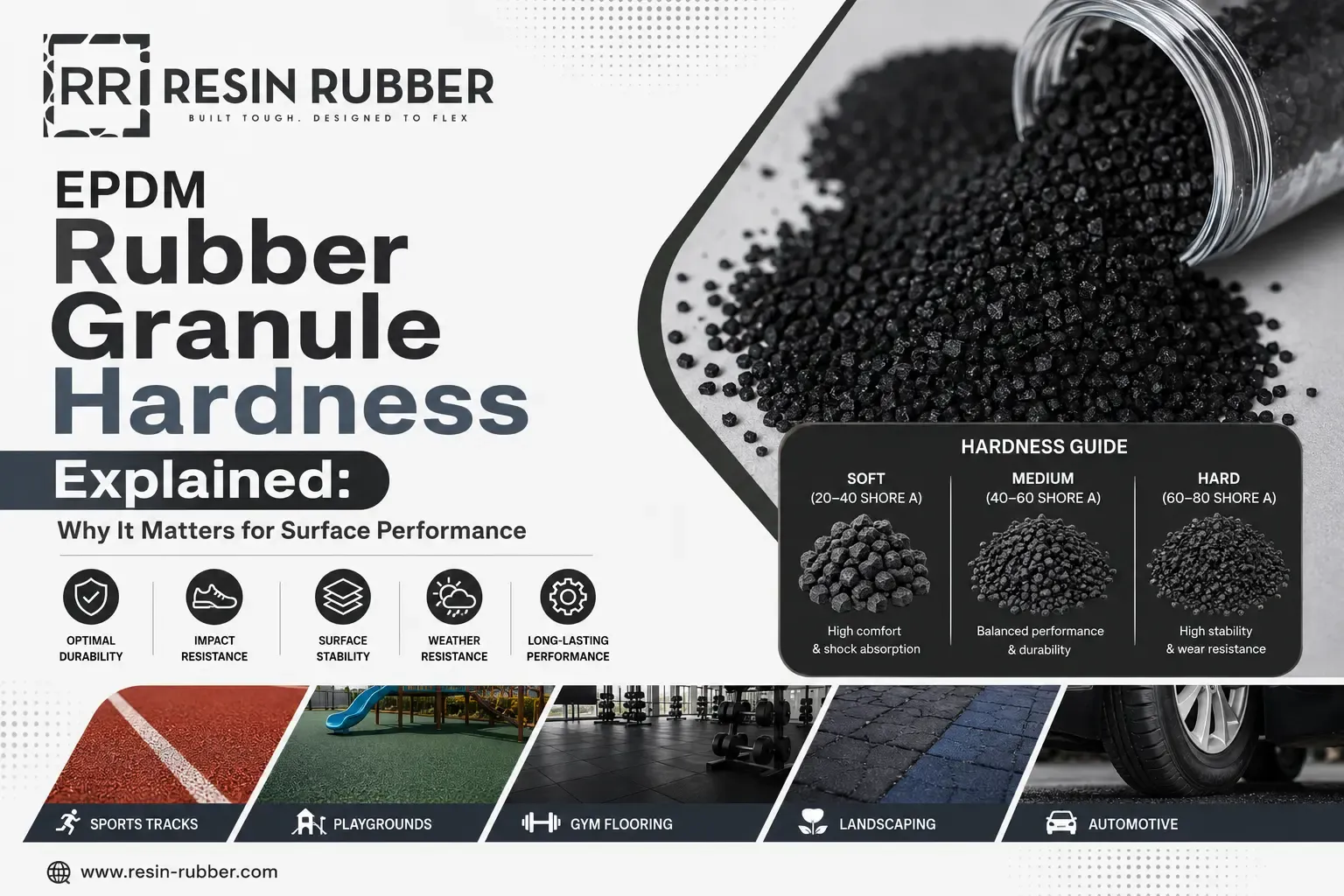
Yes, in most cases. Granules with higher density resist compression better, which matters on running tracks, playgrounds, and sports fields that see constant foot traffic, cleats, and equipment. A surface built with denser granules tends to hold its shape and cushioning properties longer before it starts to compact or thin out. Density works alongside hardness here, and the two are easy to confuse since both describe how solid a granule feels. Density measures mass packed into a fixed volume, while hardness measures resistance to indentation. A granule can be dense and soft, or lighter and firm, depending on the compound. Our EPDM rubber granule hardness guide covers how the two properties combine to determine overall surface performance.
Does density affect project cost?
It does, though not always in the direction people expect. Lower density granules can lower material cost per bag, but if the finished surface compresses faster or wears out sooner, the long-term cost of resurfacing usually outweighs the initial savings. Matching density to the intended use, rather than shopping on price alone, protects the budget over the life of the installation.
What is bulk density in EPDM rubber granules?
Bulk density is a different measurement entirely. Instead of looking at a single granule, it measures the weight of granules per unit volume when they’re loosely poured into a container, expressed in grams per liter. This number accounts for the air gaps that naturally form between individual pieces of rubber once they settle. A known volume of loose granules is poured into a container without compacting it, and the total weight is recorded. Because this figure includes the empty space between granules, it’s used for calculating how much material a project needs, not for judging the quality of the rubber compound itself. Typical bulk density values for EPDM granules used in outdoor surfacing fall between about 500 and 650 grams per liter, depending on granule size and shape.
How does granule size affect bulk density?
Smaller, more uniform granules tend to pack more tightly, leaving less air space between pieces and pushing bulk density toward the higher end of the range. Larger or more irregularly shaped granules leave bigger gaps when poured, which lowers bulk density even if the density of the rubber itself hasn’t changed at all. This is why two products with identical density figures can still need different order quantities. A finer, more consistent granule size generally means less variability from bag to bag, which also makes it easier for an installer to predict coverage before they start troweling.
Density vs bulk density at a glance
| Density | Bulk density | |
|---|---|---|
| What it measures | Mass per volume of the rubber material itself | Weight per volume of loosely poured granules, air gaps included |
| Typical unit | Grams per cubic centimeter | Grams per liter |
| Typical range for EPDM | About 1.2 to 1.5 | About 500 to 650 |
| What it tells you | Strength and expected wear life of the rubber | How much material to order and how it ships |
| Where it matters most | Comparing rubber quality between suppliers | Calculating quantities and freight cost |
Why does bulk density matter for installation?
A lower bulk density means more volume is needed to reach the same weight, which changes how many bags or totes a contractor needs to order for a given surface area. Getting this number wrong is one of the more common reasons projects run short of material midway through installation. Bulk density also affects shipping, since lower bulk density granules weigh less per container, which can reduce freight costs on larger commercial orders. Consistent bulk density from batch to batch also helps installers achieve an even, uniform spread across the surface. Inconsistent bulk density between bags can leave visible unevenness or thin spots once the surface cures, which is why working with a supplier that maintains tight quality control matters as much as the numbers on a spec sheet.
How do you estimate how much material you’ll need?
The general approach is straightforward, even though the exact numbers vary by project. Multiply the surface area by the depth your specification calls for to get the total volume of granules needed, then use the bulk density figure to convert that volume into a weight, and divide by the bag size to get a bag count. From there, it’s worth building in a margin for waste, uneven ground, and any trimming around edges or fixtures, rather than ordering the bare minimum and hoping the math works out on site. Your supplier or installer can walk through this calculation with you before you commit to a quantity.
How should buyers use these numbers when comparing suppliers?
The most reliable approach is to request both figures directly from any supplier and compare them against the intended application. A playground surface prioritizing impact absorption may call for a different density range than a running track built for durability under repeated foot strikes. Reviewing our buying guide for rubber granules alongside these two numbers gives a fuller picture of what separates a reliable supplier from a risky one. If you’re also weighing EPDM against TPV for a project, density and bulk density are two more data points where the materials diverge.
Density and bulk density aren’t interchangeable, and mixing them up when comparing quotes can lead to underestimating material needs or choosing a granule that doesn’t match the surface it’s meant to support. Density speaks to the strength and longevity of the rubber itself, while bulk density controls how much product is required and how consistently it installs. Together, these two figures give project owners a measurable way to evaluate rubber granules before committing to a supplier, rather than relying on marketing claims alone.
Looking for EPDM rubber granules backed by documented density and bulk density figures? Contact our materials team to request current technical specifications and a quote for your project.
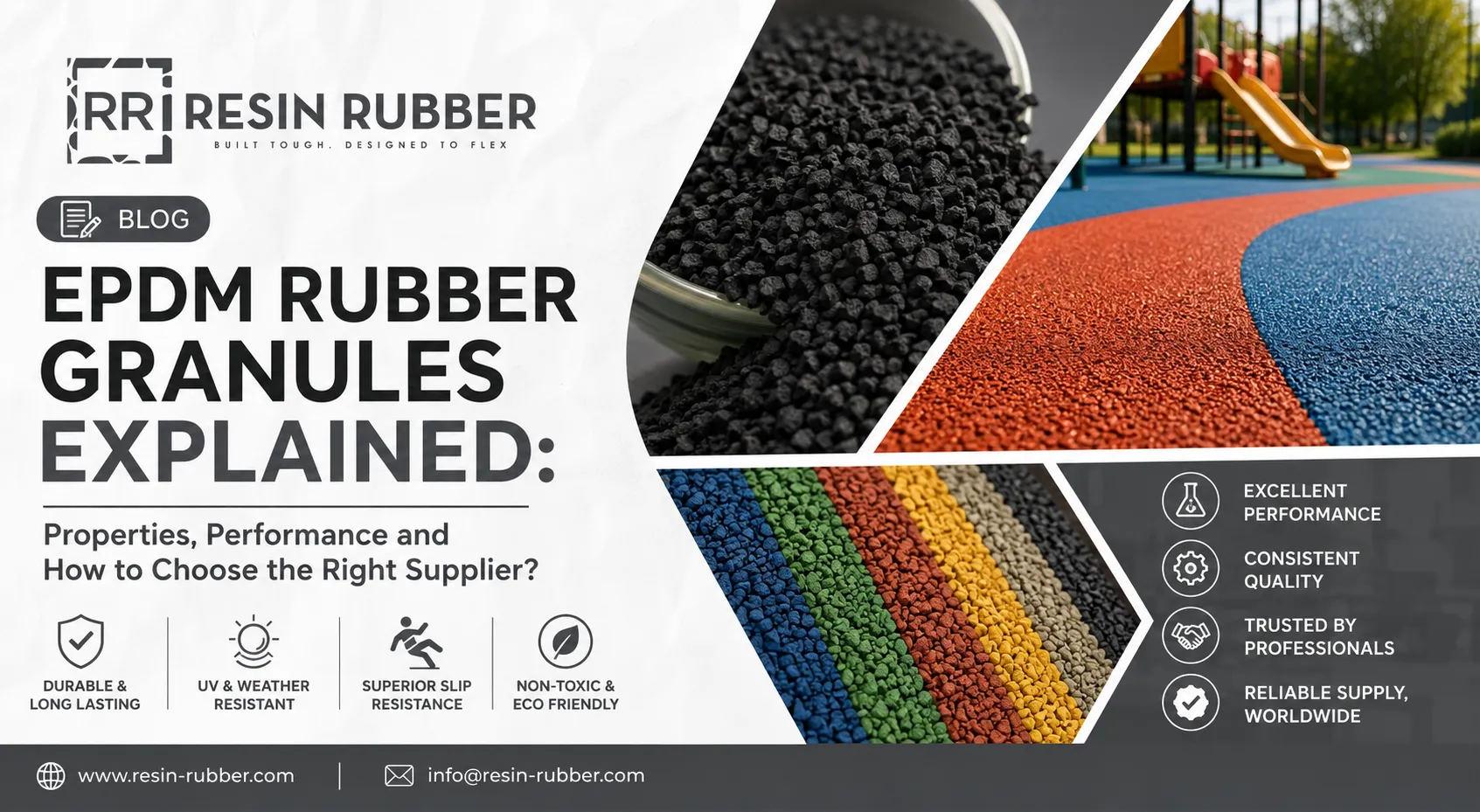
Related guides: Mixing EPDM granules and binder, what affects the cost of a rubber surface and the EPDM rubber granules: properties, performance and supplier guide.
Frequently asked questions
What's the difference between density and bulk density in rubber granules?
Density measures the mass of the rubber material itself, in grams per cubic centimeter, independent of how granules sit together. Bulk density measures the weight of loosely poured granules per liter, including the air gaps between pieces. One describes the rubber; the other describes how much space a given weight of granules takes up.
What is a typical density range for EPDM rubber granules?
Quality virgin EPDM granules typically fall between about 1.2 and 1.5 grams per cubic centimeter. A reputable supplier should list this figure on the technical data sheet for each color or blend, since it can vary slightly by formulation.
Why does bulk density matter more for ordering than density does?
Bulk density, not density, determines how many bags or totes you need for a given surface area, since it accounts for the empty space between granules once they're poured. Getting this number wrong is a common reason installations run short of material partway through.
Can two suppliers list different bulk density numbers for the same color?
Yes, since bulk density depends on granule size, shape, and how consistently a batch is processed. That's one reason it's worth requesting current technical data sheets rather than relying on a general spec that might be years old.
How do I estimate how much material my project needs?
Start with the surface area and the depth your project calls for to get a volume, then use the bulk density figure to convert that volume into a weight, and divide by bag size. Build in a margin for waste and uneven ground, and confirm the calculation with your supplier before ordering.