What affects the cost of a poured rubber surface
Quick answer
The cost of a poured rubber surface depends on the area, the condition of the existing surface, the preparation it needs, the thickness the use calls for, the color or blend and the installation requirements. Material quantities alone are not an installed price, so quotes only compare fairly when they state the same base work, thickness and binder.
Key takeaways
- Six things move the price: area, existing surface, preparation, thickness, color or blend and installation requirements.
- A materials list is not an installed price. Labor, preparation and site conditions sit on top.
- Thickness follows the use. A playground safety zone is built thicker than a walkway, and that changes the quantity of material.
- Compare quotes line by line: base work, thickness, binder for each layer and what the warranty covers.
Six things decide what a poured rubber surface costs: how big the area is, what is there now, the preparation that needs, how thick the new surface must be, which color or blend you choose, and what the installation involves. Material quantities on their own are not an installed price.
This post is about why quotes differ and how to compare them. It does not give prices. Rates change, and a number quoted for one site says little about yours.
The six factors
1. Area
More area means more granules, more binder and more time. It is also the easiest factor to measure, so start there. Measure the space and sketch the layout, including steps, curves and edges, because those take more time than a plain rectangle.
2. The existing surface
An installer needs to know what the surface is made of and what state it is in. Concrete, asphalt, pavers and compacted aggregate are each prepared differently. Cracking or movement has to be understood before anything is bonded over it. The checks are covered in Is your concrete ready for a rubber surface?.
3. Preparation
Cleaning, repair and priming come before any rubber goes down, as the chosen system requires. A sound, clean base needs less work than one with cracks, contamination or drainage problems. Preparation is often where two quotes differ most, so ask what each one includes.
4. Thickness
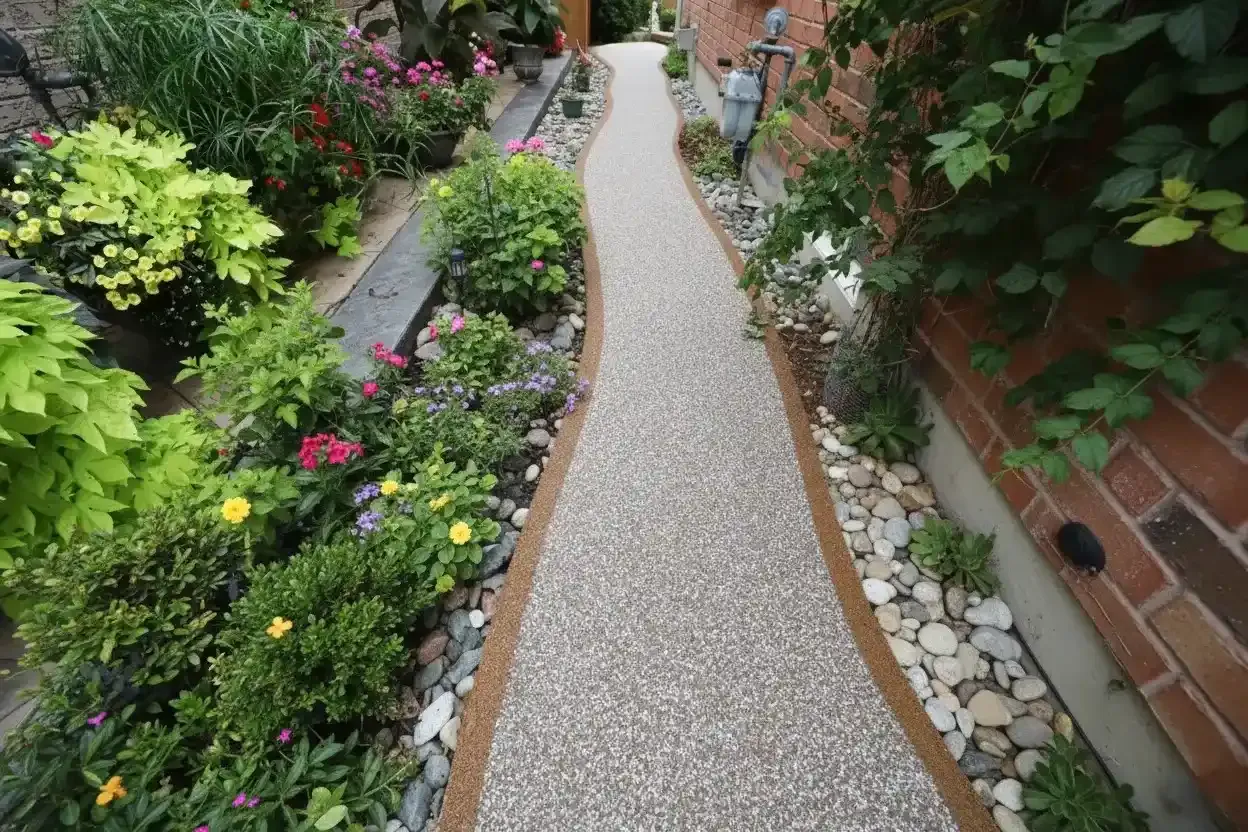
Thickness depends on the use. Walkways, patios and pool decks are laid thinner than playground safety zones, which go down thicker under equipment to give the cushioning the fall height calls for. The installer sets the thickness in the specification. A thicker build uses more material, so it costs more.
5. Color or blend
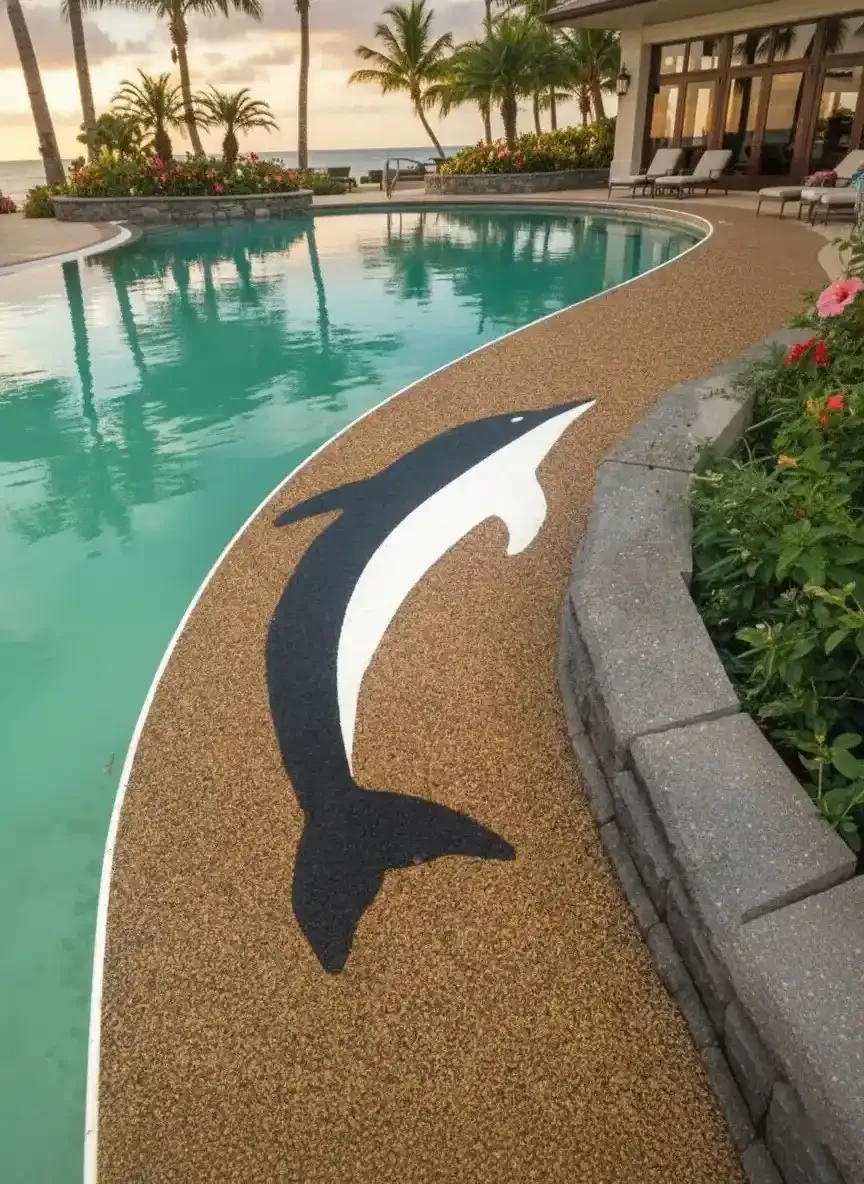
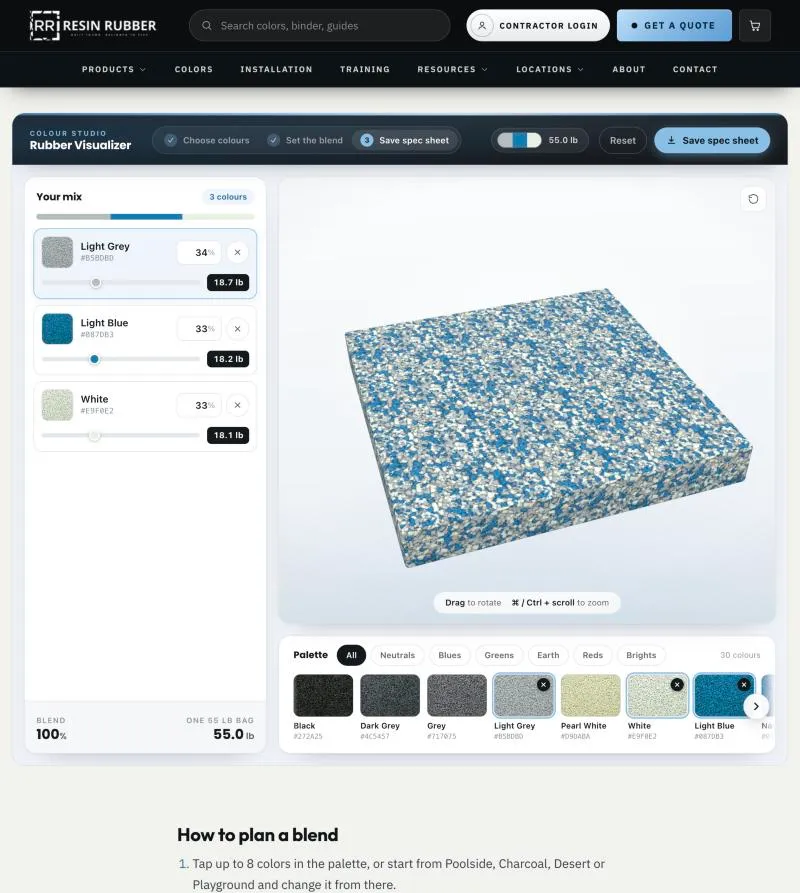
Solid colors are one shade per bag. Mixed blends combine two to four colors to a published recipe. Both are the same EPDM material and install the same way, but the choice affects what you order. Intricate designs such as borders, zones and logos also add work. See solid or mixed color EPDM granules.
6. Installation requirements
Access, site conditions, the schedule and the weather all affect the work. Your installer can explain what applies on your site, and the installation guide shows how a surface goes down. Cold, damp conditions slow curing, so timing can matter.
Material quantities: a worked example
Cost starts with how much material a surface needs. The Contractor Edition 2026 gives the planning basis. It covers material only, before waste, so treat the results as a starting point and have the materials team confirm the order.
| Layer | Granules per sq ft | Binder per sq ft |
|---|---|---|
| EPDM wear layer, 0.625 in | 0.050 bag (55 lb) | 0.164 L |
| SBR base layer, 1.5 in | 0.12 bag | 0.48 L |
The EPDM mix is 9 parts granules to 1 part binder by volume. A 5-gallon pail of binder is 18.93 L.
For 100 sq ft of EPDM wear layer, that works out to:
- granules: 100 x 0.050 = 5 bags;
- binder: 100 x 0.164 = 16.4 L, a little under one 5-gallon pail.
For 100 sq ft of SBR base at 1.5 in, it works out to 12 bags of granules and 48 L of resin, about 2.5 pails. The base layer uses a different granule, and the binder choice depends on the layer, so confirm both with the materials team. Quantities scale with thickness: the base figure is about 0.08 bag per sq ft per inch.
These are quantities, not prices. Add labor, preparation, freight, waste and margin before anyone quotes a job.
Why a materials list is not a price
Resin Rubber supplies materials and works with a network of approved installers. It does not install. A list of granules and binder pails tells you what goes into the job. It does not include the installer’s labor, the preparation, the equipment or the site costs. When you compare a materials-only figure with an installed quote, you are comparing different things.
How to compare two quotes
Ask each installer to put the following in writing, then lay the answers side by side:
- Base work. What will be cleaned, repaired and primed, and what happens at cracks and joints?
- Thickness. What thickness is quoted, and does it match the use?
- Binder. Which binder goes in each layer? Layers that sit in sun need UV-stable aliphatic binder. See aliphatic vs aromatic binder.
- Colors. Are they confirmed against a physical sample?
- Drainage. How will water leave the area after resurfacing?
- Warranty. What does it cover, for how long, and what would void it? See the warranty policy.
- Schedule. How long is the work, and when can the surface be used again? Curing time is separate from working time.
If one quote is much lower than the others, check which line items it leaves out before treating it as a bargain. The longer list of questions in 10 questions to ask before hiring a rubber surfacing installer covers the rest.
What to send to get a useful answer
For materials, contact Resin Rubber with the application, the area, the existing surface and your preferred colors. For installation, request an approved installer with your location and project details. Photos of the existing surface and of any cracks speed things up.
Frequently asked questions
Why can't I get a price per square foot from a website?
Because the same area can need very different work. The condition of the base, the preparation, the thickness and the site all change the job. An installer assesses the site and quotes the work, and the materials team can confirm quantities once the specification is known.
Does a darker or lighter color cost more?
Color choice is one of the factors that affects cost, along with whether you use a solid color or a mixed blend. Ask the materials team how your chosen colors affect the order.
How much area does a 55 lb bag cover?
There is no single figure, because coverage depends on thickness. The Contractor Edition 2026 planning basis is about 0.08 bag per square foot for every inch of thickness, or 0.050 bag per square foot for a 0.625 in EPDM wear layer, before waste. Approved trade customers can use the material calculator, and the materials team confirms the final order.
Who should I ask for a quote?
For the installation, ask an approved installer, who assesses the site and quotes the work. For materials only, contact Resin Rubber with the application, area, existing surface and preferred colors.